Save up to $1,200!
Canadian Cross-Country Journey
Places visited: Toronto, Vancouver

VIA Rail prices for The Canadian range from 2,000 to 7,500 CAD per passenger, one way, depending on the sleeper cabin type, journey length, and season. Pricing varies across VIA Rail’s three most popular long-distance routes: The Canadian (Toronto to Vancouver, 4,466 km, 4 nights), The Ocean (Montreal to Halifax, 1,352 km, 1 night), and the Corridor (Toronto to Montreal, 538 km, 5.5 hours). Economy seats start at about 60 CAD on the Corridor route from Quebec City to Montreal; Prestige Class on The Canadian can exceed 11,000 CAD in summer.
Canadian Train Vacations books all three VIA Rail routes as part of personalized itineraries with travel-experience add-ons.
The best train trips featuring the VIA Rail train are listed below:
A VIA Rail Canadian train trip costs an average of 3,500 to 7,500 CAD per passenger for a one-way journey. VIA Rail pricing depends on service class, season, train route, and distance and is not a single fixed fare.
Economy and Business Class fares sit at the lower end of the range on shorter segments, while long-distance travel aboard VIA Rail The Canadian increases cost due to multi-day travel and onboard services. Sleeper Plus cabins raise the average price by including overnight accommodation, onboard meals, and dedicated attendants. Prestige Class represents the highest tier, with private suites, in-room showers, concierge service, and premium dining, which pushes total trip cost well above the average range. Canadian Train Vacations emphasizes that understanding the VIA Rail Canadian train trip cost helps travellers select the right balance between comfort, travel time, and overall value when planning rail journeys across Canada.
Factors that influence the cost of a VIA Rail Ticket are listed below.
Service class: Service class affects price because Economy, Business, Sleeper Plus, and Prestige offer different levels of space, privacy, onboard service, and amenities. Economy is the most affordable option, offering standard seating and onboard food for puchase. Higher classes, like Sleeper Plus and Prestige, are more expensive as they include private sleeper cabins and onboard dining service.
Route and distance: Route and distance influence fare because long transcontinental journeys on VIA Rail Canada cost more than short regional routes due to extended onboard service, staffing, and travel hours. For example, shorter routes (e.g. Toronto-Montreal on the Corridor train) is priced less than long-haul journeys on a sleeper train, such as Toronto to Vancouver on The Canadian train.
Season and travel dates: Season and travel dates affect pricing because peak travel seasons (summer and fall) attract higher demand, which increases fare levels and reduces available inventory. Winter is the low season so VIA Rail often offers discounts or more affordable fares, especially on long-distance routes.
Cabin or seat availability: Cabin or seat availability shapes cost because limited inventory on sleeper cabins and higher service tiers pushes pricing upward when demand runs high.
Itinerary components: Itinerary components influence total trip cost when rail tickets are packaged with hotel stays, transfers, guided tours, and excursions. Canadian Train Vacations includes the rail fare in the complete vacation price.
Booking timing: Booking timing affects fares because early reservations benefit from increased availability and lower pricing, compared to last-minute bookings when fewer seats and cabins remain. VIA Rail prices fluctuate based on availability, so it is recommended to book 3–6 months in advance to secure better fares.
Included amenities: Included amenities determine cost differences because meals, priority service, and onboard features vary by class and appear in higher-priced ticket categories. For example, Business Class on the Corridor train is more expensive than Economy Class because Business Class includes meals and drinks onboard the train as well as station lounge access. Economy Class only includes standard seating and no meals or s lounge access.
VIA Rail costs on popular routes vary by distance, service class, and season, with shorter corridor routes priced significantly lower than long-distance journeys. VIA Rail pricing for short journeys on the Corridor train range from $50-$400 CAD, while cross-country sleeper-train routes can exceed $2,500-$7,000 if Sleeper Plus or Prestige Class is chosen.
Routes between Toronto and Montreal represent the lowest average pricing, with Economy and Business Class fares positioned for short daytime travel. Medium-distance routes between Toronto and Ottawa or Quebec City increase in cost due to longer travel time and upgraded service options. Long-distance routes operated by VIA Rail (including The Canadian between Toronto and Vancouver) carry the highest pricing, reflecting multi-day travel, overnight accommodation, onboard dining, and dedicated sleeper service. Understanding route-specific pricing helps travellers match budget, comfort level, and trip length when planning VIA Rail journeys across Canada.
Explore an in-depth guide on: Train across Canada
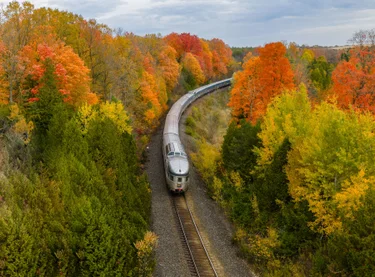
The Canadian Train refers to the flagship transcontinental rail service operated by VIA Rail, The Canadian, which connects Eastern and Western Canada through a continuous long-distance route. The Canadian Train route covers 4,466 kilometres between Toronto and Vancouver, crossing Northern Ontario, the Prairie provinces, and the Canadian Rockies over 4 days and 4 nights. The Canadian Train offers passengers a classic multi-day sleeper-train experience with private sleeper cabins, a dining car, and lounge cars with glass-domed viewing areas.
The Canadian Train route begins in Toronto and travels west through Sudbury, Winnipeg, Saskatoon, Edmonton, and Jasper before reaching Vancouver. Travellers can choose to do the whole route or part of the route. The Canadian train operates year-round.

The Ocean Train refers to the long-distance passenger rail service operated by VIA Rail that connects Central Canada with the Atlantic coast. The Ocean train runs between Montreal and Halifax, linking Quebec with New Brunswick and Nova Scotia through a continuous overnight rail route. The whole journey takes 22 hours and covers 1,346 kilometres.
The Ocean Train route begins in Montreal and travels east through Quebec and New Brunswick before reaching Halifax. Scenic highlights on the route include the St. Lawrence River,the New Brunsiwck coastline, Maritime villages, and coastal areas that define Eastern Canada rail travel. The Ocean Train supports overnight service with sleeper accommodations and onboard dining.

The Corridor Train refers to the high-frequency intercity rail network operated by VIA Rail Corridor that connects major urban centers in Southern Ontario and Quebec. The Corridor Train route links cities such as Toronto, Ottawa, Montreal, and Quebec City through frequent daytime departures. The Corridor Train prioritizes speed, convenience, and city-center access rather than overnight travel or sightseeing experiences.
The Corridor Train route runs across Canada’s most densely populated region and supports business travel, leisure trips, and rail-based city hopping. Rail segements are usually 3–5 hours long, depending on the destination. The Corridor Train runs year-round and serves as the backbone of Eastern Canada rail travel.

|
Class |
Toronto to Vancouver (CAD, one way) |
Montreal to Halifax (CAD, one way) |
Toronto to Quebec City (CAD, one way) |
What is included |
|
Economy |
From 514 |
From 152 |
From 98 |
Reclining seat, shared washrooms, no meals. |
|
Sleeper Plus (upper berth) |
From 1,083 |
From 434 |
Not available |
Semi-private berth with curtains, all meals, access to shared showers. |
|
Sleeper Plus (cabin for 1) |
From 2,200 |
From 583 |
Not available
|
Private cabin with bed, all meals, access to shared showers. |
|
Sleeper Plus (cabin for 2) |
From 1,960 |
From 563 |
Not available
|
Two bunk-style beds, private washroom, all meals, access to shared showers. |
|
Prestige Class |
From 6,040 |
Not available |
Not available
|
Larger cabin, double bed, private shower, dedicated concierge, all meals and drinks. |
Note: Example prices are listed per person. VIA Rail train prices vary by season, with peak summer months (July, August) typically having the highest prices. These prices are for rail only.
|
Audience |
Discount |
How to claim |
Notes |
|
Adults 65+ |
Limited, but CAA members get 10-20 percent off Economy and Sleeper Plus |
Add CAA membership number when booking. Select 'Senior' passenger. |
Photo ID required at boarding. |
|
Children 2 to 12 |
50 percent off Economy, 25 percent off Sleeper Plus |
Add child passenger in booking. |
Not available in Business or Prestige. |
|
Infants under 2 |
Travel free on adult lap |
Add 'infant' to booking. |
No assigned seat. |
|
Tuesday Deals |
Variable, often 25 to 50 percent off Corridor |
Book Tuesdays, ticket dated within promo window. |
Refresh weekly. |
Note: Discount information is for VIA Rail tickets only and is subject to change.
Ask our Canadian Insiders for Exclusive Packages
For a stress-free experience, consider booking a customized train vacation with one of our travel experts at Canadian Train Vacations. Our packages include VIA Rail tickets, premium hotel stays, airport transfers, and guided excursions, offering better value than booking train tickets alone.
Athena McKenzieContent Manager
Each VIA Rail fare class includes a defined set of services tied to travel distance, comfort level, and route type. Economy Class includes reserved seating, shared restrooms, and access to onboard services suited for short and medium routes. Business Class provides a premium experience on the Corridor route, with wider seating, meal service, priority boarding, and station lounge access where available. Sleeper Plus fare class includes private or semi-private sleeping accommodations, bedding, onboard meals, and dedicated sleeper car attendants for overnight routes. Prestige Class includes a spacious private cabin, a full bed, an ensuite shower, concierge service, all onboard meals and drinks, lounge car access on long-distance trains.
Operator
VIA Rail
Route Length
4,466 kilometres
Travel Duration
4 days, 4 nights
Travel Regions
Crosses 5 Provinces
Service Levels
3 Class Options
Dining
Meals and Drinks Onboard
Onboard Accommodation
Private Sleeper Cabins
Observation Cars
Panoramic Views
Year-Round Operations
Jan to Dec
Unique Train Experience
Not the same as Rocky Mountaineer
VIA Rail Canadian train routes connect Canada through a structured national rail network anchored by long-distance and regional services. The primary transcontinental route is Toronto to Vancouver which is serviced by VIA Rail's The Canadian, crossing the Prairies, Northern Ontario, and the Canadian Rockies over a multi-day journey. Regional corridors extend east through Ontario, Quebec and the Maritimes (the Corridor and Ocean trains) and north through Alberta and British Columbia (the Jasper-Prince Rupert train), creating a continuous rail framework that supports both transcontinental travel and focused regional itineraries.
VIA Rail Canadian train routes matter because each route has a different travel time, passes different scenery, and offers different service levels. Long-distance routes emphasize onboard comfort, with sleeper cabins and dining service, while short routes prioritize daytime efficiency between major cities. Canadian Train Vacations builds itineraries around VIA Rail routes to align rail distance, overnight segments, and hotel stays into a cohesive travel plan.
Each VIA Rail train route highlights a distinct region, from dense urban corridors in Eastern Canada to remote boreal landscapes, prairie expanses, and mountain passes in the West. Reading more about VIA Rail Canadian train routes clarifies travel duration, onboard service levels, seasonal differences, pricing details, and how long-distance and regional routes combine into a complete rail network across Canada.

Route: Vancouver, British Columbia to/from Toronto, Ontario
Scenery: Forests, valleys, Canadian Rockies, prairies, lakes and cities
Duration: 4 days and 4 nights
Type of train: Sleeper train
Features: Private sleeper cabins, dining car, glass-domed viewing car
Service levels: Economy, Sleeper Plus, Prestige
Route: Montreal, Quebec to/from Halifax, Nova Scotia
Scenery: St. Lawrence River, countryside areas, coastal views
Duration: 1 night and 1 day
Type of train: Sleeper train
Features: Private sleeper cabins, dining car
Service levels: Economy, Sleeper Plus
Route: Provides service between major cities in Ontario and Quebec
Scenery: St. Lawrence River, countryside
Duration: Depends on start/end point
Type of train: Commuter-style train, frequent service
Features: Meals served onboard, large windows
Service levels: Economy, Business Class
Route: Winnipeg, Manitoba to/from Churchill, Manitoba
Scenery: Farmland, remote communities, rivers and lakes
Duration: 1 day and 20 hours
Type of train: Sleeper train
Features: Snacks and drinks available for purchase, viewing lounge
Service levels: Economy, Sleeper Class
Route: Jasper, Alberta to/from Prince Rupert, British Columbia
Scenery: Wild landscapes, forests and rivers in Northern BC
Duration: 1 day and 11 hours
Type of train: Daytime train, stop at a hotel overnight in Prince George (needs to be booked and paid for separately)
Features: Snacks and drinks available for purchase, viewing car lounge
Service levels: Economy
VIA Rail Canadian train stops refer to the principal cities, small towns and regional gateways on VIA Rail train routes. Routes can be combined to make a coast-to-coast rail journey across Canada. VIA Rail Canadian train stops include urban centers like Toronto and Vancouver, prairie cities like Winnipeg and Saskatoon, the Canadian Rockies, coastal destinations, and more.

Begin the transcontinental rail journey in Canada’s largest city and eastern rail hub. Toronto anchors national rail corridors through Union Station and connects cultural districts, financial centers, and major transportation networks before westbound departure. Board The Canadian sleeper train for travel to Winnipeg, Jasper or Vancouver.
The Corridor trains also depart Toronto for travel to cities in Ontario and Quebec.
Prestige experience: Prestige Class is available on VIA Rail's Canadian train from Toronto. Includes priority boarding and private sleeper cabin access for long-distance travel.

Arrive at the geographic center of Canada and gateway to the Prairies. Winnipeg reflects a historic rail city shaped by trade, immigration, and cultural institutions located near the Assiniboine and Red Rivers. Winnipeg is a stop on VIA Rail The Canadian train.
Recommended stay: One to two days for museums and historic districts.

Cross Saskatchewan’s largest city, set along the South Saskatchewan River. Saskatoon represents prairie urban life framed by open skies, agricultural regions, and river valleys. Saskatoon is serviced by VIA Rail The Canadian train.
Stop duration: Station stop with platform access.

Enter Alberta’s capital city and western rail junction. Edmonton signals the shift from flat prairie landscapes to foothills and mountain terrain while serving as a cultural and transportation hub. Edmonton is a stop on The Canadian train.
Recommended stay: One or two days for urban parks and historic sites. Continue the train journey to Jasper if short on time.

Travel into the Canadian Rockies through Jasper National Park. The small town of Jasper offers easy access to alpine scenery, wildlife corridors, and ancient glaciers.
Recommended stay: Two to three days for national park exploration.
_2400_Web.jpg?auto=webp&format=webp&width=300&max_age=31536000)
Conclude the transcontinental journey on the Pacific coast. Vancouver combines coastal mountains, oceanfront districts, and urban neighbourhoods as the western terminus of the national rail route. Vancouver is the start and end point on VIA Rail The Canadian train.
Recommended stay: Two days to discover the city's natural attractions and vibrant neighbourhoods.
Toronto
Winnipeg
Saskatoon
VIA Rail Canadian train interiors vary by route, with long-distance sleeper trains offering clearly defined living, dining, and viewing spaces arranged across multiple cars. The Canadian Train (Toronto-Vancouver) separates daytime seating, sleeping accommodations, and social areas to maintain comfort and privacy during multi-day journeys across Canada.
Economy Class cars feature wide reclining seats, overhead storage, power access, and shared restrooms. Sleeper Plus Class cars include semi-private and private sleeping accommodations. Sleeper Plus Cabins have daytime seating that converts to bunk-style beds at night, with fresh linens, power outlets, and a private sink. Prestige Class cabins provide the most spacious interiors, offering full-size beds, ensuite washrooms with showers, lounge seating, and personal concierge service.
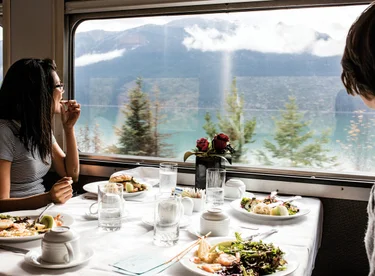
Dining cars serve freshly prepared meals in scheduled sittings, creating a social area for passengers. Lounge cars elevate the onboard experience through glass-domed ceilings that showcase views of forests, prairies, mountain corridors, and river valleys. Interior layouts prioritize movement flow, quiet zones, and temperature-controlled comfort, allowing passengers to settle into a steady rhythm throughout the transcontinental journey.
Save Money and Enjoy Peaceful Winter Train Journeys
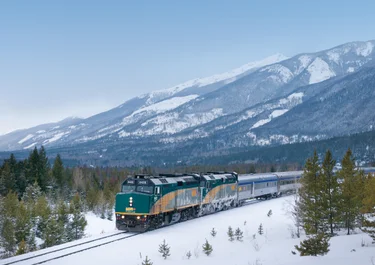
For lower fares and a more relaxed onboard atmosphere, I'd recommend winter travel. Not only are prices lower, but the snow-covered landscapes through the Rockies and boreal forests create a magical experience.
Hannah Poaros-McDermottTravel Writer and Senior Content Coordinator
The top four places to visit on a VIA Rail Canadian Train journey are Toronto, Winnipeg, Jasper and Vancouver. These destinations offer a mix of urban experiences and natural beauty. Toronto, serving as the eastern gateway to the journey, combines modern architecture with cultural districts, and highlights like the CN Tower and waterfront trails make it a vibrant starting point for cross-country travel. Winnipeg, rich in history and culture, offers access to historic districts, river walks, and year-round festivals that reflect Indigenous, Francophone, and immigrant influences. Jasper, nestled in Jasper National Park, features alpine landscapes, glaciers, lakes, and abundant wildlife, with guided tours and the Jasper SkyTram providing stunning views of mountain peaks and valleys. Vancouver, with its coastal scenery and urban attractions, offers a blend of nature and culture. Some of the best things to do in Vancouver include the walking along the trails in Stanley Park, shopping on Granville Island, and exploring the historic streets of Gastown. These are some of the best places to visit in Canada.

Toronto is Canada's largest city and the eastern starting point for the VIA Rail Canadian Train journey. The city has modern architecture, including the CN Tower which dominates the skyline and showcases views across the city and Lake Ontario. The Toronto waterfront provides trails and parks that connect urban life with natural surroundings. Neighbourhoods such as Kensington Market and Chinatown highlight diverse cultural influences. The destination establishes a vibrant introduction to cross‑country travel. Exploring the Distillery District and visiting the Toronto Islands are also some of the best things to do in Toronto.
Winnipeg is the capital of Manitoba and a stop on VIA Rail The Canadian train route. The Forks Historic Site offer riverside markets and historic buildings next to the river, while the Canadian Museum for Human Rights presents striking architecture and world-class exhibits. Visiting Assiniboine Park is a great day out and one of the best things to do in Winnipeg as it features a zoo, conservatory, outdoor theatre, and other attractions.
Jasper is a small town within Jasper National Park, offering easy access to alpine scenery and incredible wildlife viewing opportunities. The town serves as a gateway to glaciers, lakes, and mountain trails. Maligne Lake is a highlight, with guided tours and boat rides taking visitors to Spirit Island — one of the most photographed places in the Canadian Rockies.
Vancouver is a coastal metropolitan city located in British Columbia between the Pacific Ocean and the Coast Mountains. Vancouver serves as a primary gateway for Alaska cruise and train tours, connecting a major cruise port with established rail corridors into Western Canada. The city is known for natural scenery, cultural diversity, and the integration of urban infrastructure with surrounding outdoor environments. Popular things to do in Vancouver include cycling the seawall, visiting Stanley Park, walking across the Capilano Suspension Bridge, and exploring historic and cultural neighbourhoods.
The popular train-trip itineraries best suited for you, if you want to experience VIA Rail The Canadian train, are listed below.
The Vancouver to Toronto Train Tour is a 10-night rail vacation that combines two iconic Canadian train experiences. Begin with the Rocky Mountaineer’s daylight sightseeing train through the Canadian Rockies, then continue east on VIA Rail’s The Canadian sleeper train across the Prairies and northern Ontario. Highlights include dramatic mountain landscapes, charming rail towns and comfortable overnight train travel across the country.
Available:
Length:
Time on train:
Price from:
Train type:
The Canadian Cross-Country Train Trip is an 8-night journey linking Toronto and Vancouver on one of Canada’s classic rail routes. Travel aboard VIA Rail’s legendary sleeper train The Canadian for a four-night rail experience through the forests of northern Ontario, the wide-open Prairies and the majestic Canadian Rockies. Relax as the scenery unfolds outside your window and enjoy time in two of Canada’s most vibrant cities before and after the train journey.
Available:
Length:
Time on train:
Price from:
Train type:
The Canada Coast to Coast by Rail journey is a 19-night rail adventure connecting the Atlantic and Pacific coasts of Canada. Travel aboard VIA Rail’s The Ocean and The Canadian sleeper trains, along with the Rocky Mountaineer daylight sightseeing train through the Canadian Rockies. Highlights include historic eastern cities, the vast Prairies, dramatic mountain scenery and vibrant coastal destinations, all experienced at a relaxed pace with a mix of scenic rail travel and time to explore along the way.
Available:
Length:
Time on train:
Price from:
Train type:
VIA Rail Canada Train Reviews present traveller feedback and ratings focused on rail service quality, comfort, scenery, and trip experience across passenger routes operated by VIA Rail. Canada train reviews reflect real-world impressions from seating comfort, onboard service, and the visual experience between key destinations in Ontario, Quebec, and the Atlantic regions.
Book your VIA Rail Canadian Train trips with Canadian Train Vacations for the reasons listed below.
Coast-to-coast trip options: VIA Rail The Canadian is just one train experience in Canada and can be combined with other journeys for guests wishing to travel further east. Canadian Train Vacations organize personalized coast-to-coast trips with seamless rail and road transfers. Passengers can explore Eastern cities, Prairie regions, coastal landscapes, and the Canadian Rockies.
Guidance on cabin and service options: VIA Rail The Canadian offers Economy, Sleeper Plus, and Prestige Class. The experts at Canadian Train Vacations help travellers select the right cabin, comfort level and inclusions.
Transfers at city centres: The local experts at Canadian Train Vacations arrange train station and hotel transfers that connect with VIA Rail The Canadian arrivals and departures.
Personalized itineraries: Canadian Train Vacations organizes VIA Rail Canadian trips that meet each traveller's needs, interests, pace and price. All the details are taken care of by local experts.
VIA Rail operates Canada’s national passenger rail network and anchors long-distance train travel across the country. VIA Rail manages regional routes and overnight services that link Ontario, Quebec, the Prairies, the Rockies, and the Pacific Coast. The flagship service, VIA Rail The Canadian, connects Toronto and Vancouver through a continuous multi-day sleeper-train journey.
VIA Rail remains a popular choice for cross-Canada train travel because it offers an immersive experience and scenic views. Sleeper cabins, dining cars, and panoramic observation lounges support extended travel through regions where highways and air routes bypass communities and landscapes. Downtown station access in major cities, year-round departures, and multiple fare classes allow travellers to cross Canada at a relaxed pace.
VIA Rail pricing across Canada operates through a layered structure built on route distance, service type, and travel demand. VIA Rail assigns a base fare according to how far the train travels, then adjusts pricing based on whether the route supports daytime seating or overnight accommodation.
Short intercity routes within Ontario and Quebec remain priced at lower tiers because travel occurs within a single day and relies on reserved seating. Overnight and long-distance routes increase in price due to extended operating hours, onboard staffing, and sleeping accommodations. The transcontinental service VIA Rail The Canadian sits at the top of the pricing scale because the journey spans 4 days and includes sleeper cabins, dining cars, and observation lounges.
Seasonal travel demand influences pricing across all routes, with summer and early fall carrying higher fare levels due to limited capacity. Cabin inventory further shapes pricing since there are only a fixed number of private sleeper accommodations. VIA Rail pricing is a variable system where distance establishes the base cost, and comfort level, timing, and availability determine the final ticket price.
No, VIA Rail does not cost more than other Canadian train options as it is often the only option for long-distance rail travel in Canada. VIA Rail offers a wide pricing range, varying by distance and service level. Short segements on the Corridor train in Ontario and Quebec are cheaper than long-distance journeys on The Canadian and The Ocean sleeper trains.
VIA Rail remains the most accessible way to experience Canada by rail because it offers a range of service levels tailored to different budgets. Unlike private sightseeing trains — such as the Rocky Mountaineer, which operates exclusively at a premium price point — VIA Rail provides a variety of tiers, from essential Economy seating to all-inclusive Prestige Class cabins.
The price difference between Economy, Business, and Prestige Class on VIA Rail reflects seating comfort, service level, and onboard inclusions rather than distance alone. VIA Rail structures fares so each class aligns with a distinct travel style and budget.
Economy Class represents the lowest price tier and typically ranges from $50 on short segments on the Corridor route to $500 on longer multi-day trips. Business Class costs noticeably more than Economy because fares include wider seating, meal service, lounge access at select stations, and flexible ticket conditions, which commonly place pricing several times higher than Economy on the same route.
Sleeper Plus Class starts at $450 for semi-private accommodation on overnight journeys, with private cabins costing $700+ for the same route. For The Canadian train, prices for Sleeper Plus cabins range from $1,200 to $5,000 for a 4-day, 4-night journey. This is a big cost difference from Economy and reflects the additional inclusions, such as meals in the dining car, a private sleeping space, and access to premium viewing lounges.
Prestige Class sits at the top tier on long-distance trains and prices reach $6000+ due to private luxury sleeper cabins, full dining service, dedicated concierge service, priority boarding, and premium viewing lounge access.
Prestige Class on VIA Rail from Toronto to Vancouver costs 5,500 CAD to 8,000 CAD per passenger, depending on season, departure date, and cabin availability. Winter departures sit at the lower end of the range due to reduced demand, while summer departures reach the highest prices because of peak travel interest across the Canadian Rockies and long daylight hours. Pricing reflects a multi-day transcontinental journey that spans roughly four nights onboard The Canadian train.
Prestige Class pricing reflects the luxury service level and premium inclusions. Prestige Class passengers relax in a spacious private cabin with a full-size bed, private ensuite washroom with shower, large picture window, flat screen entertainment system, and personal climate controls. The fare includes all onboard meals prepared by chefs, alcoholic and non alcoholic beverages, concierge service, priority boarding, and access to the Park Car lounge. Cost differences across dates follow seasonal demand, limited Prestige cabin inventory, and route popularity rather than distance alone, which explains the price gap between winter and summer departures on the Toronto to Vancouver Train route.
Yes, there is a sleeper cabin option for overnight VIA Rail trips across Canada. VIA Rail includes sleeper accommodations on long-distance routes (The Canadian, The Ocean, The Winnipeg-Churchill) to ensure passengers stay comfortable throughout the journey.
Sleeper Plus accommodations include semi-private berths and fully enclosed private cabins with daytime seating that converts into beds at night. The Cabin for One and Cabin for Two options provide private compartments with secure doors, storage space, and washroom access.
Prestige Class cabins (only available on The Canadian train) offer the highest level of privacy with ensuite showers and expanded living space. Sleeper fares include bedding, onboard meals in the dining car, access to lounge cars, and sleeper attendant service, providing passengers with an immersive sleeper-train experience.
Yes, VIA Rail prices differ by route across Canada because route length, onboard service level, and trip duration define fare structure. Short routes linking major urban centers in Eastern Canada operate with reserved seating, daytime schedules, and regular departures, which means pricing is affordable and budget-friendly. Long-distance routes crossing multiple provinces involve overnight travel, sleeper cabins, dining service, and extended onboard staffing, which raises base fares and total package costs.
Unique routes, such as The Winnipeg-Churchill or The Ocean train, occupy a mid-range. These prices reflect moderate distances and specialized service levels tailored to these specific regions. Seasonal demand, departure frequency, and cabin availability further shape pricing differences across routes, making each VIA Rail journey cost specific to geography and service scope rather than following a single national rate.
A VIA Rail ticket price includes the core transportation service between the selected departure and arrival stations on the booked route. The fare secures a reserved seat or assigned sleeping accommodation, depending on the chosen class, which confirms placement on a specific train and departure date. The ticket price covers access to comfortable rail cars, onboard washrooms, and standard station services throughout the journey.
A VIA Rail ticket price includes seating in Economy Class or private and semi-private accommodations in Sleeper Plus or Prestige Class on long-distance routes. Sleeper and premium classes include scheduled meals served in dining cars, access to lounge cars, and dedicated onboard staff support during overnight travel. The fare reflects distance travelled, service level, and route type rather than optional add-ons.
Airfare, hotel stays, alcoholic beverages, and off-train excursions are not included in the VIA Rail ticket price. Passengers that want a comprehensive package that includes off-train services should reach out to Canadian Train Vacations for a personalized itinerary.
No, VIA Rail packages are not all-inclusive. VIA Rail ticket prices or rail-vacation packages bundle core rail travel, seating or cabin accommodations, and scheduled meals on certain service classes, but they do not cover every travel cost. VIA Rail packages exclude airfare, alcoholic beverages, third-party tours, and hotel stays unless those elements are specifically added through a rail vacation provider. Standard ticket pricing covers rail transport between stations, reserved seats or cabins, onboard dining for overnight services, and access to lounge cars. Optional items such as local transfers, off-train excursions, and external accommodations remain outside the base package price, which means travellers plan and pay separately for those parts of the trip.
Yes, VIA Rail packages can include hotel stays when booked through a rail vacation provider such as Canadian Train Vacations. VIA Rail ticket sales by themselves cover rail travel, seating or sleeper accommodations, and onboard services, but standard rail tickets do not automatically include hotel rooms. Trips provided by Canadian Train Vacations combine rail segments with hotel stays and guided excursions to create a comprehensive itinerary. These packages combine train travel with overnight hotel nights in destinations such as Montreal, Quebec City, or Halifax, which simplifies planning and connects rail legs with ground accommodations.
No, meals are not included in all VIA Rail ticket prices. Economy Class tickets cover transportation and seating, while food and beverages require a separate purchase from onboard services or station vendors. Meals are included with Sleeper Plus Class and Prestige Class fares on overnight and long-distance routes. Sleeper Plus Class includes prepared meals served in the dining car, access to snacks and non-alcoholic beverages during meal service. Prestige Class includes full onboard dining, in-cabin meal service, pre-dinner appetizers and alcoholic beverages as part of the fare, which clearly separates premium fare inclusions from standard economy travel.
Yes, VIA Rail prices include mandatory taxes and standard fees within the ticket fare. The base fare on the VIA Rail website does not show the taxes until you go to checkout and confirm the booking. The ticket price would update to reflect applicable federal and provincial taxes based on the route, departure province, and arrival province, which allows clear cost visibility before purchase. VIA Rail ticket prices exclude optional expenses tied to service level and personal travel choices. Economy Class fares exclude meals, alcoholic beverages, checked baggage beyond the free allowance, seat upgrades, sleeper accommodations, and lounge access, which carry separate charges. Sleeper and premium classes include meals and basic onboard services, while optional add-ons still increase the final cost. The structure separates core transportation costs from discretionary upgrades, which keeps base fares transparent across routes.
Yes, VIA Rail tickets support changes and refunds based on the selected fare type. Flexible and Business class fares allow refunds and schedule changes with minimal or no penalties, while Economy class fares follow stricter rules tied to discount level and booking conditions. VIA Rail structures ticket flexibility around fare restrictions rather than route length. Discounted Economy fares lock in lower prices with limited change options and higher penalties, while higher-tier fares prioritize schedule freedom and refundable terms. Ticket conditions appear clearly during booking, which allows informed decisions before purchase.
To book VIA Rail tickets, follow the five steps below.
Yes, VIA Rail tickets are subject to discounts and deals that apply to specific routes, travel dates, and passenger types. VIA Rail publishes promotional offers, seasonal fare reductions, and category-based discounts such as reduced pricing for seniors, youth, students, and family groups. These discount options lower the baseline cost compared to standard full-price fares on popular routes across Canada.
Promotional pricing and special deals appear during low-demand periods, early booking windows, and select departure dates, which gives travellers opportunities to secure lower fares for Corridor routes, long-distance services, and sleeper class upgrades.
Canadian Train Vacations also runs seasonal promotions and early booking deals on personalized VIA Rail train trips. Contact the local travel experts for more information.
Yes, cheap VIA Rail tickets are available for specific routes and travel dates. VIA Rail offers lower-priced fares on short segments (e.g. Quebec City-Montreal) and off-peak departures that reflect demand rather than a fixed high cost. Discounted fares appear most often on short and medium distance routes between major cities, where Economy class seats sell at lower prices when booked well in advance. Promotional pricing and seasonal deals also reduce fares on longer routes, which allows travellers to secure cost-effective tickets compared to last-minute or premium cabin purchases.
VIA Rail does not offer a public discount code or a standard senior discount. Savings for travellers over 65 may be available through select programs, such as CAA membership, military fares, or other promotional offers. Availability varies by route and fare type, and photo identification or membership may be required.
Yes, cheaper deals on VIA Rail travel are sometimes available through a travel agent because agents may access promotional fares, package discounts, and bundled pricing that do not always appear on standard ticketing pages. A travel agent, such as Canadian Train Vacations, reviews available inventory, fare classes, and seasonal offers across routes operated by VIA Rail to match each traveller's budget with preferred service levels. A travel agent can combine rail fares with hotel stays and transfers in coordinated packages, which spreads the cost across multiple components and may result in better overall value than booking each element separately.
The best time to book VIA Rail tickets for lower prices is at 3-6 months before the intended departure date. Early reservations secure access to discounted fare classes and promotional pricing offered by VIA Rail before inventory tightens closer to departure. Booking early for summer, fall, or holiday periods improves the chance of securing Economy or Business class seats at reduced rates compared to last-minute pricing. Midweek departures and shoulder seasons, such as late winter and early spring, may offer lower fares because demand is typically lighter. Planning and booking well ahead gives access to lower fare classes before they sell out, which can affect the total cost of rail travel across Canada.
About the author: Athena McKenzie is the Content Manager at Fresh Tracks Canada. An experienced lifestyle journalist, she has written about travel, design, arts and entertainment. Her work has appeared in The Globe and Mail, Toronto Star, Zoomer Magazine, Elle Canada and... Read more
Useful Links
Canadian Train Trip FinderCanadian Train Tours for SeniorsWhere to go in CanadaJourneys Across CanadaCanadian Rockies and West CoastEastern Canada and The MaritimesCanadian North and ArcticEastern Canada Train ToursWestern Canada Train ToursTrain Trips from VancouverRoad Trips and Self DrivesFamily AdventuresVacations for Active SeniorsCanadian History and Culture TripsWildlife Viewing Train VacationsCanadian Pacific RailwayExplore Canada
VIA RailRocky Mountaineer Train TripsThe Canadian TrainRocky Mountaineer Train CostCanadian Rockies Train TripsBest Train Trip in CanadaTrain Across CanadaLuxury Train CanadaCanadian Sleeper TrainVancouver to Banff TrainToronto to Vancouver TrainTrain from Calgary to VancouverBanff to Jasper TrainWinter Train CanadaVIA Rail Prestige ClassBest Alaska Cruise and Train PackagePopular Train Trips
Trans Canada TrainCanada Coast to Coast TrainCanada Cross Country TrainVancouver to Toronto Train TripCanadian Rockies Train TripToronto to Quebec City TrainLuxury Train Trip from Montreal to Quebec CityWinter Train WonderlandCalgary to Toronto Train TripRocky Mountaineer and Alaska CruiseBanff and Jasper Tours from CalgaryLords of the Wilderness Bear ViewingRockies Winter Wonderland by TrainCanadian Cross-Country Journey in WinterEssential Rockies by TrainThe Canadian Train Prestige Class CostCanadian Train Vacations
About Us© 2026 Fresh Tracks Canada