
2027 trips at 2026 prices
Essential Rockies by Train
6 days • April – October
Places visited: Vancouver, Kamloops, Lake Louise, Banff
Loading...
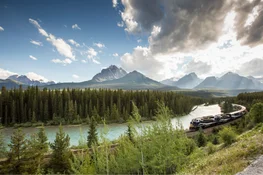
Rocky Mountaineer offers all-daylight train journeys through Western Canada and is the most famous Rocky Mountain train tour provider, known for glass-dome train coaches and luxury service, operating since 1990. There are four named routes, 2 to 3 days long, with overnight hotel stays between travel days.
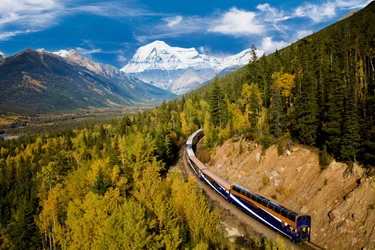
Rocky Mountaineer launched its first all-daylight train journeys through Western Canada in 1990.
First Passage to the West, Journey through the Clouds, and Rainforest to Gold Rush are the Canadian routes.
Every journey pairs daylight rail travel with comfortable overnight hotels, so you see all the scenery and sleep well each night.
For personalized trips that include SilverLeaf Service on Rocky Mountaineer. GoldLeaf Service is a premium upgrade option.
Rocky Mountaineer runs four routes, with three routes offering distinct journeys through British Columbia and Alberta. All operate during the daylight only, so you travel through landscapes at a relaxed pace and overnight in comfortable hotels at destinations along the way. Choose your route based on the scenery you want to discover and your preferred starting point.
Compare the routes below (from prices in CAD, per person):
Pricing in the table below is for a personalized train vacation that features a Rocky Mountaineer journey. These trip itineraries are created by the local experts at Canadian Train Vacations by Fresh Tracks Canada. In addition to the train experience, itineraries include hotel stays, additional destinations, small-group sightseeing tours, transfers, and customer support from booking through travel.
Passage to the Peaks was a special limited-run route that Rocky Mountaineer ran during June and July 2026. The route focused on the mountain towns in the Canadian Rockies and did not feature Vancouver. It went between Banff and Jasper with an overnight hotel stay in Kamloops. The Passage to the Peaks route is discontinued and no longer available.
Rocky Mountaineer also operates the Rockies to Red Rocks route (now rebranded under Canyon Spirit) in the United States. Canadian Train Vacations does not offer trips that feature this route.

First Passage to the West connects Vancouver to Banff or Lake Louise, with a stop in Kamloops, and is the route Rocky Mountaineer first established when the company was founded in 1990. The Rocky Mountaineer is the only passenger train to travel along this historic section of the Canadian Pacific Railway, with Fraser Canyon, the Spiral Tunnels, and Castle Mountain being some of the highlights. Discover the full route details, departures and service-level options on the First Passage to the West page.

Journey through the Clouds runs from Vancouver to Jasper via Kamloops, following the North Thompson River and passing Mount Robson, the highest peak in the Canadian Rockies. The route gives guests a perspective on the Rockies that few travellers experience, traversing Yellowhead Pass and reaching Jasper National Park in two rail days. See the Journey through the Clouds page for full itinerary and departure options.

Rainforest to Gold Rush is Rocky Mountaineer's longest and most scenically varied route, winding from Vancouver through Whistler and Quesnel to Jasper over three days and two overnight hotel stops. The route moves through coastal rainforest, the Sea to Sky corridor, the Cariboo gold-rush country and on to the alpine landscapes of Jasper National Park. 2026 is the final operating year for this route, so guests hoping to experience it should plan to travel soon. Full details are on the Rainforest to Gold Rush page.
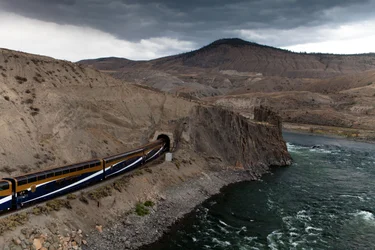
Historic train route
If you’re interested in the history of the Canadian Pacific Railway, I’d suggest Rocky Mountaineer’s First Passage to the West route from Vancouver to Banff — it is the only train route to feature the Spiral Tunnels, an engineering marvel, and Craigellachie, the location where the last spike was added in 1885.
Angie BosworthVacation Advisor at Canadian Train Vacations by Fresh Tracks Canada
2027 trips at 2026 prices
Places visited: Vancouver, Kamloops, Lake Louise, Banff
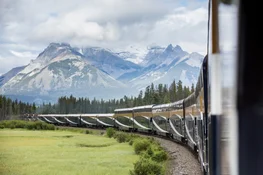
Places visited: Vancouver, Kamloops, Banff, Jasper
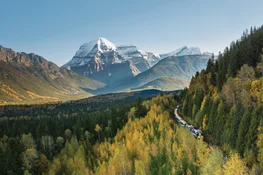
2027 trips at 2026 prices
Places visited: Vancouver, Kamloops, Jasper, Lake Louise, Banff
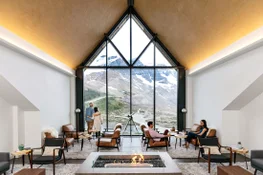
Places visited: Vancouver, Kamloops, Jasper, Glacier View Lodge, Banff

Take our quiz to receive personalized trip recommendations

No sign up required
The Rocky Mountaineer routes connect two provinces: British Columbia and Alberta. Vancouver is the western gateway for the three Canadian routes, with the rail lines fanning northeast through the mountains to reach the Rockies towns of Banff, Lake Louise or Jasper. Overnight hotel stops are in Kamloops, Quesnel or Whistler. A fourth route, Rockies to the Red Rockies, operates in the United States between Denver and Moab.
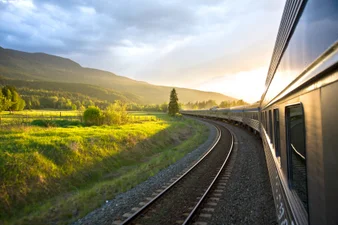
All Rocky Mountaineer journeys have a relaxed pace and are designed around daylight hours, so passengers experience the most spectacular views and optimal photo opportunities. You board in the morning, watch the scenery unfold across the day, then rest overnight at a comfortable hotel before embarking on the next day’s journey.
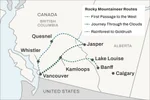
Both service levels are available on First Passage to the West and Journey Through the Clouds routes. On the Rainforest to Gold Rush route, only GoldLeaf service is offered. The difference between the service levels is the coach type, dining experience, number of hosts, and features available.

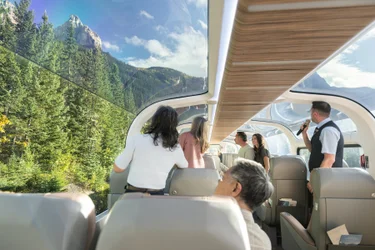

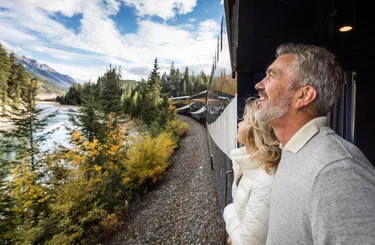
GoldLeaf Service includes assigned seating on the top floor of a bi-level glass-dome coach, access to an open-air viewing platform on the lower level, and gourmet meals prepared by executive chefs, served in a dedicated dining room. There is a spiral staircase that connects the two levels and an elevator for those who can’t use the stairs. It is the ultimate Rocky Mountaineer experience and a luxurious upgrade.
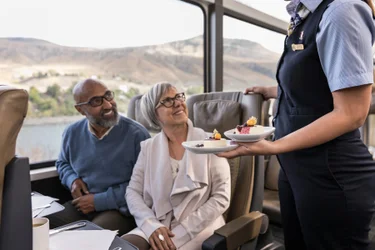
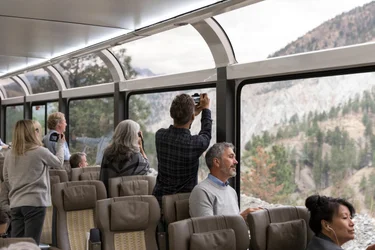
SilverLeaf Service offers assigned seating in a single-level glass-dome coach with meals served at your seat and a lower starting price, making it an excellent choice for guests who want the panoramic views without the enhanced features of GoldLeaf service.
Both service levels are set out in full on the GoldLeaf vs SilverLeaf comparison guide.
Compare at a glance (prices in CAD, per person):
**Prices above are per person and are subject to change.The table reflects the lowest price available in 2026 for a personalized trip itinerary that includes a Rocky Mountaineer 2-day train journeys. These inclusive itineraries also include hotel stays, additional destinations, train station and airport transfers, sightseeing excursions, and customer service support.
Rocky Mountaineer vacations that include SilverLeaf Service start from $6,170 CAD per person, with GoldLeaf Service as a premium upgrade option. Prices vary by route, month and service level. April and May departures tend to carry the lowest prices of the season, while June through September is the most popular time to travel, because of the long daylight hours and warmer weather, and has the highest prices.
In addition to the train experience, Canadian Train Vacations itineraries include hotels, guided excursions, airport transfers, train station transfers, and customer service support throughout the trip. A full cost breakdown, month-by-month pricing context and guidance on what drives the train fare are on the Rocky Mountaineer cost page.

Rocky Mountaineer operates a worldwide non-discount clause, and rail-only pricing is standardized across authorized sellers. While resellers and tour operators cannot legally discount the rail-only ticket, seasonal promotions and package savings may be available. Our Canadian Insiders will let you know if there are any special offers available for your dates and trip itinerary.
The Rocky Mountaineer's key point of difference from VIA Rail's The Canadian is the daylight-only travel model. You board the train in the morning and travel through the day, enjoying spectacular scenery from the comfort of a glass-dome car with panoramic windows, before spending the night in a comfortable hotel. Because the train operates only during daylight hours, you won’t miss any of the scenery as you travel between Vancouver and the Canadian Rockies.
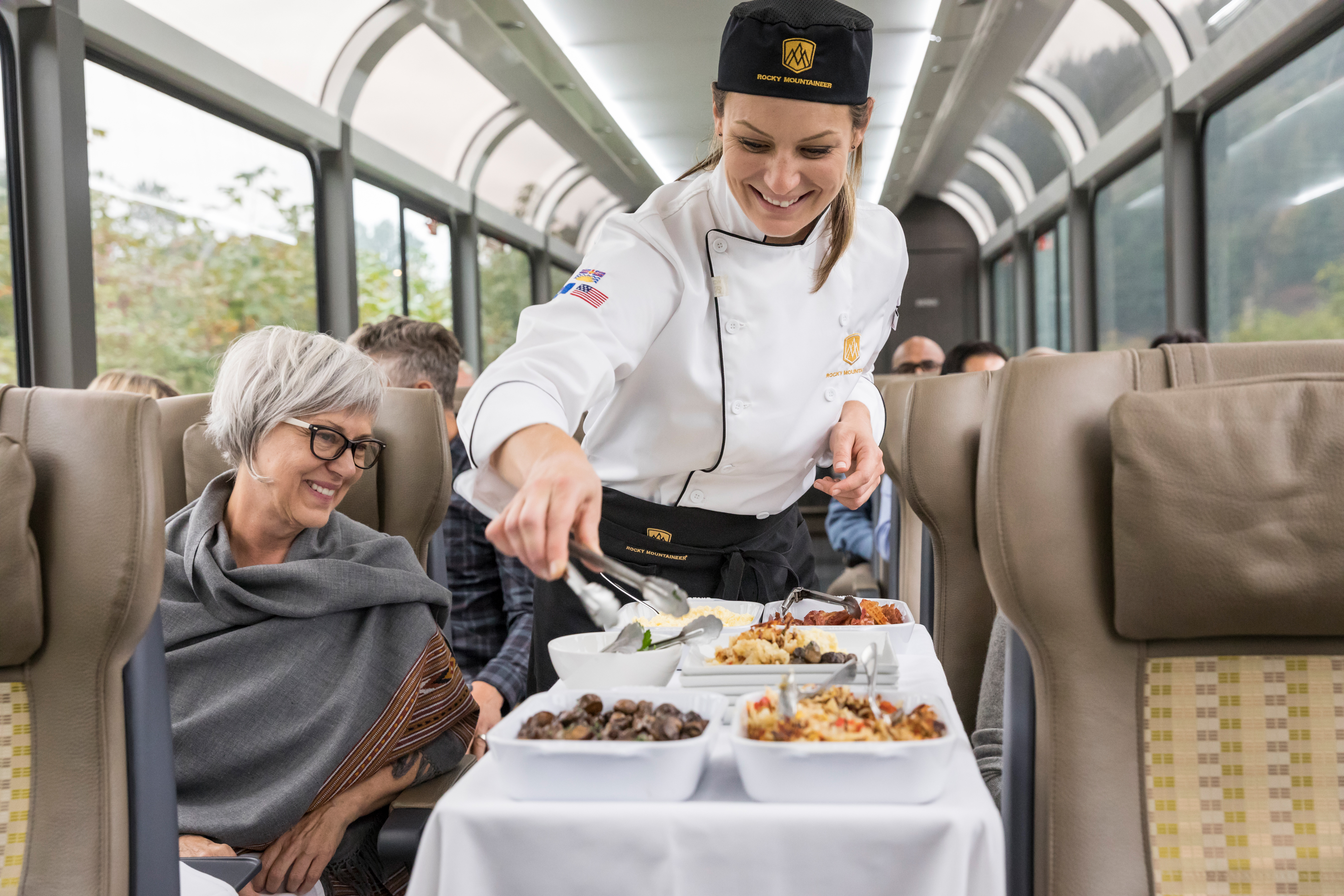
On board, GoldLeaf Service features seating in a bi-level glass-dome coach with panoramic views from the upper level and gourmet meals served in a dedicated lower-level dining room. SilverLeaf Service offers a single-level coach with oversized windows and delicious meals served at your seat. Both service levels include onboard dining and showcase fresh, locally inspired cuisine prepared with regional ingredients.
At the end of each rail day, you stay in a hotel overnight, with accommodations arranged as part of your personalized itinerary. Overnight stops include Kamloops on the First Passage to the West and Journey Through the Clouds routes, and Whistler or Quesnel on the Rainforest to Gold Rush route.
The relaxed pace is one of Rocky Mountaineer's greatest strengths. With no overnight travel on the train, you have time to enjoy the scenery, exceptional onboard dining, and comfortable hotel stays between each day's journey.
Want to compare your rail options? Read our complete guide to Rocky Mountaineer vs VIA Rail to understand the differences in routes, onboard service, accommodations, schedules, and overall travel experience.

GoldLeaf service includes seating in a bi-level glass-dome coach with panoramic windows.

GoldLeaf guests enjoy gourmet meals in a lower-level dining room.

GoldLeaf guests have access to a large,exclusive viewing platform on the lower level of the coach.
.jpg?auto=webp&format=webp&width=375&max_age=31536000)
SilverLeaf guests travel in a single-level glass-dome coach with meals served at their seat.

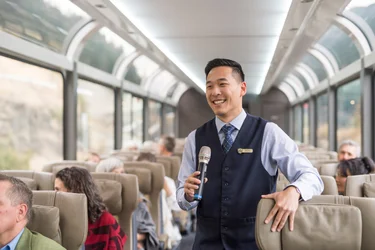
Rocky Mountaineer hosts greet you at the train station and offer attentive service throughout your journey.

Rocky Mountaineer hosts tell stories and provide commentary along the way.
Step aboard the Rocky Mountaineer and discover what makes this scenic rail journey unforgettable— Inside Rocky Mountaineer Train
Rocky Mountaineer is well suited to older travellers and guests who value a comfortable, easy pace. A few facts:
If you have specific mobility or accessibility requirements for your Rocky Mountaineer trip, the local travel experts at Canadian Train Vacations by Fresh Tracks Canada are happy to discuss the details when you request a personalized quote.
Both Rocky Mountaineer and VIA Rail offer exceptional ways to see Canada by train, but they suit different kinds of travellers. Rocky Mountaineer offers daylight-only sightseeing journeys between Vancouver and the Canadian Rockies, with glass-dome train coaches, gourmet dining, and overnight hotel stops. VIA Rail's The Canadian is a transcontinental sleeper-train service from Toronto to Vancouver (or reverse), crossing the prairies and northern Ontario as well as the Rockies. The Canadian train has sleeper cabins, a dining car, and glass-domed viewing cars with lounge areas.
Compare them at a glance:
**Prices in the table above reflect trip itineraries created by Canadian Train Vacations by Fresh Tracks Canada. In addition to the train journey, these personalized vacations include guided activities and excursions in the Canadian Rockies, airport and train station transfers, hotel accommodation, and Fresh Tracks Canada customer service support.
If you are drawn to the sleeper-train experience or want to travel across the country, full details are on The Canadian page. For a deeper side-by-side analysis, see our Rocky Mountaineer vs VIA Rail guide.
Complete Canadian Rockies by Train is one of the most popular Rocky Mountaineer vacations, combining luxury rail travel with hotel stays in the region's most iconic destinations. Journey from Vancouver through the spectacular Canadian Rockies on Rocky Mountaineer, then spend time in Banff, Lake Louise, and Jasper. Tour the breathtaking Icefields Parkway, visit the Columbia Icefield, stay in hand-picked mountain hotels, and choose from a range of sightseeing experiences to personalize your 8-day train trip.
Available:
Length:
Time on train:
Price from:
Train type:
Rocky Mountaineer runs from April to October, so you can travel in spring, summer or fall. Each season presents distinct landscapes, weather conditions, and photographic opportunities. Three windows stand out for different reasons:
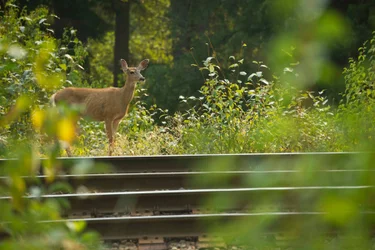
April and May showcase spring scenery – snow-capped mountains, blooming wildflowers, half-thawed glacial lakes, and rushing rivers. Wildlife sightings rise as animals emerge from hibernation. Spring is the start of the Rocky Mountaineer season and these departures often have the lowest prices.
June through August are the summer months and peak season, with the longest daylight hours, warmest weather and the widest choice of departure dates. It’s the best time to see the turquoise waters of glacial lakes in the Rockies. More guided excursions, like hiking, lake cruises and water activities, are available in Banff and Jasper during the summer.
September to early October offers striking fall foliage – including golden larch trees in Banff – crisp air, and excellent wildlife viewing during the salmon run and elk rutting periods. September is a very popular month to travel, while October represents the last train departures of the season and is a quieter time to visit the Canadian Rockies.
As for if the Rocky Mountaineer is worth it – many travellers would say yes, especially if your priority is to experience the spectacular landscapes of Western Canada. The glass-dome coaches are purpose-built with oversized windows for panoramic views and the daylight-only journey means you don’t miss any of the scenery.
Your personalized itinerary, created by our Canadian Insiders, is tailored to your interests and travel style, which means the trip fits you rather than a fixed group. If you value more space, an elevated dining experience, and access to more vantage points for viewing the scenery, GoldLeaf Service is well worth considering. Our local travel experts can help you decide if GoldLeaf is the right upgrade for you.
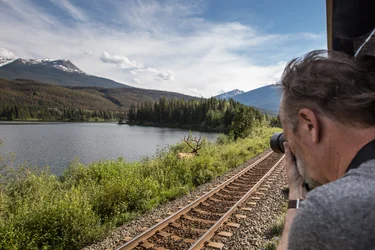
Wildlife viewing
One of my favourite things about the Rocky Mountaineer is that the hosts announce wildlife sightings — and the train actually slows down so you have time to grab your camera or step out onto the outdoor platform.
Shannon BrandSenior Vacation Advisor at Fresh Tracks Canada
Planning a Rocky Mountaineer vacation starts with finding the itinerary that's right for you. Whether you're comparing routes, deciding between GoldLeaf Service and SilverLeaf Service, or choosing the best time to travel, our Canadian Insiders at Canadian Train Vacations by Fresh Tracks Canada will personalize every detail — from your rail journey and hotels to transfers and sightseeing experiences.
If you're planning to travel during the popular June to September season or are interested in GoldLeaf Service, it's worth booking early for the best choice of departures. Explore our collection of Rocky Mountaineer tours or speak with one of our Canadian Insiders to start planning your personalized itinerary.
Limited time offer
expires Oct 30, 2026
Limited time offer
expires Oct 30, 2026
Limited time offer
expires Oct 30, 2026
Limited time offer
extended to Oct 30, 2026
Limited time offer
extended to Oct 30, 2026
Useful Links
Canadian Train Trip FinderCanadian Train Tours for SeniorsWhere to go in CanadaJourneys Across CanadaCanadian Rockies and West CoastEastern Canada and The MaritimesCanadian North and ArcticEastern Canada Train ToursWestern Canada Train ToursTrain Trips from VancouverRoad Trips and Self DrivesFamily AdventuresVacations for Active SeniorsCanadian History and Culture TripsWildlife Viewing Train VacationsCanadian Pacific RailwayExplore Canada
VIA Rail Train Across CanadaRocky Mountaineer Train TripsThe Canadian TrainRocky Mountaineer Train CostCanadian Rockies Train TripsBest Train Trip in CanadaLuxury Train CanadaCanadian Sleeper TrainVancouver to Banff TrainToronto to Vancouver TrainTrain from Calgary to VancouverBanff to Jasper TrainWinter Train CanadaVIA Rail Prestige ClassBest Alaska Cruise and Train PackageVIA Rail PricesPopular Train Trips
Trans Canada TrainCanada Coast to Coast TrainCanada Cross Country TrainVancouver to Toronto Train TripCanadian Rockies Train TripToronto to Quebec City TrainLuxury Train Trip from Montreal to Quebec CityWinter Train WonderlandCalgary to Toronto Train TripRocky Mountaineer and Alaska CruiseBanff and Jasper Tours from CalgaryLords of the Wilderness Bear ViewingRockies Winter Wonderland by TrainCanadian Cross-Country Journey in WinterEssential Rockies by TrainThe Canadian Train Prestige Class CostCanadian Train Vacations
About Us© 2026 Fresh Tracks Canada

