Rocky Mountaineer vs VIA Rail Comparison

Rocky Mountaineer vs VIA Rail

Rocky Mountaineer and VIA Rail offer two distinct Canadian rail experiences. Rocky Mountaineer is a luxury sightseeing train that travels through the Canadian Rockies during daylight hours, offering panoramic views and gourmet meals. VIA Rail is Canada’s national passenger rail service, connecting major cities from coast to coast with daytime trains and overnight journeys featuring sleeper cabins and dining cars.

The two differ in purpose and style. Rocky Mountaineer focuses on scenic immersion, with routes such as First Passage to the West and Journey Through the Clouds that showcase dramatic landscapes, rivers, and historic towns in Western Canada. VIA Rail emphasizes long-distance intercity travel across multiple regions of Canada, with routes including The Canadian from Toronto to Vancouver and The Ocean from Montreal to Halifax. Rocky Mountaineer centres on luxury and daylight sightseeing, while VIA Rail provides practical, long-distance transportation with traditional amenities.

Each train service has a different purpose. Rocky Mountaineer delivers luxury sightseeing experiences focused on Western Canada’s mountain scenery. VIA Rail offers regional diversity and national connectivity through its long-distance routes. Together, they highlight contrasting approaches to Canadian rail travel: scenic indulgence and accessible, intercity transportation.

Which is better, VIA Rail or Rocky Mountaineer?

The better choice between VIA Rail and Rocky Mountaineer depends on travel goals, distance coverage, service structure, and trip rhythm. VIA Rail leads on route coverage, overnight travel, scheduled service, and city-to-city connectivity, while Rocky Mountaineer leads on scenic focus, onboard hosting, engaging commentary, and daytime sightseeing value. VIA Rail supports long-distance continuity, private sleeping cabins, and practical transportation across regions, while Rocky Mountaineer prioritizes daylight mountain corridors, hotel-based nights, and a guided luxury sightseeing experience. Cost, structure, travel duration, and purpose are factors to consider when choosing the right train experience, with VIA Rail offering extended long-distance journeys across Canada and Rocky Mountaineer providingall-daylight sightseeing rail journeys in Western Canada.

The comparison becomes clear through purpose, duration, and geography. VIA Rail performs better for distance, intercity travel, and overnight rail experiences across multiple regions. Rocky Mountaineer performs better for daytime travel, controlled pacing, and visual access to mountain landscapes. The better option depends on the traveller’s priority, whether that is long-distance rail travel across Canada or a scenic luxury rail experience in the Canadian Rockies.

Explore an in-depth guide on: Train Across Canada

Rocky Mountaineer vs VIA Rail: Key differences

In-depth analysis of features, services, and experiences on Rocky Mountaineer vs VIA Rail.

Feature

Rocky Mountaineer

VIA Rail

Pricing

Premium fares reflecting luxury service and curated experiences

Moderate to premium fares with varied service levels, including economy and sleeper options

Service Type

Luxury sightseeing train focused on daylight travel through Western Canada

National passenger rail service offering scenic day-time and overnight journeys across Canada

Routes

Western Canada routes, Vancouver to/from the Canadian Rockies


 (First Passage to the West, Journey Through the Clouds, Rainforest to Gold Rush, Passage to the Peaks)

Long-distance routes between cities and provinces across Canada


(The Canadian: Vancouver-Toronto, The Ocean: Montreal-Halifax, Corridor: Quebec City-Windsor)

Schedule and Duration

Daylight-only train journeys lasting two to three days per route

Intercity and long-distance routes, some train services span multiple days and include overnight travel

Onboard Experience

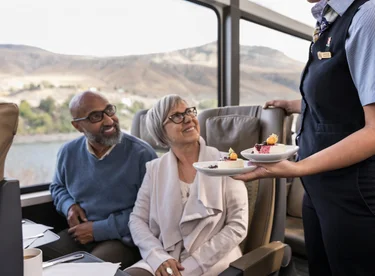
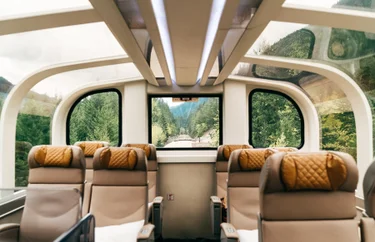
Glass-dome coaches, gourmet dining, storytelling, and luxury seating

Domed viewing cars, sleeper cabins, dining cars, and daytime seating options 

Target Audience

Travellers seeking a luxury sightseeing train journey in the Canadian Rockies

Travellers seeking an immersive sleeper-train experience or cross-country travel

Inclusions

Gourmet meals, alcoholic and non-alcoholic beverages, overnight hotel stays

Varies depending on train route and service level, e.g. meals in dining cars, sleeper accommodations, and basic amenities

Typical Route Style

Scenic immersion through mountain landscapes and river valleys

Cross-country exploration through varied regions and cultural hubs

Booking Considerations

Limited seasonal departures requiring advance planning

Year-round service for all train routes, limited availability for sleeper cabins

Seasonality

Operates from April to October, highlighting mountain scenery

Operates year-round across diverse climates and regions

Rocky Mountaineer vs VIA Rail cost comparison

Rocky Mountaineer costs more compared to VIA Rail for similar distances through the Canadian Rockies, though it depends on the service level and season of travel. Rocky Mountaineer ticket prices start around $2,295 CAD per person for SilverLeaf service and $3,115 CAD per person for GoldLeaf service on a two-day journey (rail-only base rates). Seasonal changes and route length push some longer packages above CAD $5,000 per person. Meals onboard the train and mid-way hotel stays on the route are included in the rates.

VIA Rail pricing for cross-country routes across Canada varies widely by fare class, route length, and booking timing. Economy class on Vancouver–Jasper overnight trains starts near $180 CAD per person (one-way recliner seat with no bed), Sleeper Plus fares span roughly CAD $400 to $2,200 per person for semi-private berth or basic private cabin options, and high-end Prestige cabins start at $2,450 CAD per person for the same segment. Pricing during the peak summer season is higher. Long transcontinental travel from Toronto to Vancouver on Sleeper Plus cabins ranges around $2,050 to $4,500 CAD per person, with Prestige cabins around $5,500 to $7,500 CAD per person.

Rocky Mountaineer pricing stays focused on luxury daytime sightseeing with included meals and overnight hotel stops, which drives up cost relative to VIA Rail’s broader fare spectrum that includes basic seats, mid-range sleepers, and premium cabins across longer distances.

Best train trips featuring VIA Rail and Rocky Mountaineer in 2026

The best train trips featuring VIA Rail and Rocky Mountaineer are the Vancouver to Toronto Train Journey, the Ultimate Canadian Rockies by Train, and the Canada Coast to Coast by Train. Train trips highlight Canada’s diverse landscapes through immersive journeys that combine classic rail travel with luxury sightseeing. VIA Rail provides coast-to-coast exploration with the combination of long-distance routes (The Canadian and The Ocean), featuring sleeper cabins, dining, and domed viewing lounges.

Rocky Mountaineer offers luxury daylight journeys through Western Canada with glass-dome train coaches and gourmet dining. Each route highlights different scenery. VIA Rail emphasizes overnight travel through diverse regions, while Rocky Mountaineer showcases mountain scenery and focuses on daytime sightseeing. Combining both of these top Canadian rail experiences into one trip itinerary provides travellers with the opportunity to explore more of the country.

Which one is better for pricing, Rocky Mountaineer or VIA Rail?

The pricing for VIA Rail is better for affordability and flexibility, with fares that scale by route and class, making rail travel accessible across a wide range of budgets. Rocky Mountaineer prices sit at a premium level, reflecting an inclusive sightseeing product with upscale service, and curated routes, which places it well above standard intercity rail costs.

Pricing Attribute

Rocky Mountaineer

VIA Rail

Price Range

$2,295–$5,000+ CAD per person

$250–$6,000 CAD+ per person

Basic Option

N/A

Economy Class

Mid-Tier Options

SilverLeaf Service

Sleeper Plus Class, Business Class

Premium Option

GoldLeaf Service 

Prestige Class

What’s Included

Meals, beverages, hotel stays, onboard service

Varies by class; meals included in sleeper services

Value Proposition

Luxury train travel in the Rockies

Comfortable way to travel across Canada

Seasonal Variation

High price fluctuation during peak travel months

Moderate variation by season and demand

Booking Window

Advance booking recommended

Advance booking recommended with occasional last-minute deals

Group Discounts

Limited group pricing

Regular group discounts available

Best for Budget

Luxury and special-occasion travel

Suitable for all travel budgets, depending on route and service class

Which one is better for the service type, Rocky Mountaineer or VIA Rail?

The service type for Rocky Mountaineer is better for daylight sightseeing as custom-built glass-dome train coaches offer panoramic views, while VIA Rail provides a service type centred on national transportation with daytime and overnight trains, private cabins, and multiple travel classes. Rocky Mountaineer prioritizes curated scenic service, while VIA Rail prioritizes functional rail travel across long distances.

Service Attribute

Rocky Mountaineer

VIA Rail

Service Focus

Scenic daytime rail experience

Intercity and long-distance transportation

Route Coverage

Limited routes through the Canadian Rockies

Nationwide routes across Canada

Operating Style

Daytime travel with overnight hotel stays

Daytime and overnight train travel

Service Levels

SilverLeaf and GoldLeaf

Economy, Business, Sleeper Plus, Prestige

Onboard Staff Role

Hosts provide narration and guest support

Staff manage transportation, cabins, and dining

Meals

Full meal service is included during travel

Meals included in Business, Sleeper Plus, and Prestige classes

Accommodation Style

No onboard sleeping cabins

Private sleeper cabins and berths available

Viewing Experience

Glass-domed coaches with panoramic views

Large windows in select dome cars

Travel Purpose

Leisure-focused scenic journeys in Western Canada

Long-distance travel across Canada, immersive sleeper-train experiences

Which one is better for routes, Rocky Mountaineer or VIA Rail?

The routes of VIA Rail are better for travellers looking to explore multiple regions across Canada as VIA Rail offers broader route coverage than Rocky Mountaineer. As Canada’s national passenger service, VIA Rail operates trains across multiple provinces, offering long-distance routes that connect major cities in eastern and western Canada. Rocky Mountaineer runs limited routes through the Canadian Rockies, primarily between Vancouver and Jasper, Banff or Lake Louise. VIA Rail covers many more destinations and distances, while Rocky Mountaineer focuses on a smaller set of scenic routes in western Canada.

Routes Attribute

Rocky Mountaineer

VIA Rail

Geographic Reach

Western Canada only

Coast-to-coast across Canada

Route Variety

Few signature scenic routes

Many scheduled train routes

Major Connections

Vancouver to Rockies destinations (Banff, Jasper, Lake Louise)

Halifax, Toronto, Montreal, Winnipeg, Jasper, Vancouver, Quebec City

Service Frequency

Limited departures by season

Regular departures year-round

Stops

Select scenic stops

Many city and regional stops

Travel Lengths

Day segments with hotel layovers

Short hauls to multi-day journeys

Scenic Emphasis

Routes highlight mountain scenery

Routes include urban, regional, and nature segments

Schedule Predictability

Scheduled departures for each route

Frequent scheduled options for all services

Which one is better for schedule and duration, Rocky Mountaineer or VIA Rail?

The schedule and duration of VIA Rail are better as there is a wider range of train service options year-round. VIA Rail operates on set schedules with regular departures on many routes and provides overnight options for longer journeys, while Rocky Mountaineer runs a seasonal timetable with departures on select days, focusing on daytime rail travel through the Rockies. 

VIA Rail supports frequent scheduled services and varied trip lengths across multiple regions, while Rocky Mountaineer limits operations to specific seasons and fixed daylight travel segments. This makes VIA Rail better suited to flexible travel timelines, while Rocky Mountaineer is designed for structured, scenic rail experiences.

Schedule & Duration Attribute

Rocky Mountaineer

VIA Rail

Seasonal Operation

Operates from April to October

Runs year-round on most routes

Departure Frequency

Few departures per route per week

Daily departures on shorter routes, two departures per week on long-distance routes

Time of Day

Daytime travel only

Day and overnight options

Trip Length Structure

Two or three days with overnight hotel stays

Short intercity trips to multi-day sleeper-train journeys

Overnight Travel

No overnight accommodation onboard

Overnight cabins available 

Schedule Flexibility

Fixed set dates during the season

Broad schedule choices throughout the year

Typical Journey Duration

Slow-paced scenic train journeys, minimum of two or three days long 

Varies from a couple of hours to multiple days – duration based on travel distance

Which one is better for the onboard experience, Rocky Mountaineer or VIA Rail?

The onboard experience of Rocky Mountaineer is better for sightseeing. Rocky Mountaineer train journeys are designed around glass-dome coaches, meal service, and hosted commentary during daylight scenic travel. VIA Rail provides an onboard experience geared toward long-distance transportation, with features on select routes and classes that include lounges, sleeping cabins, and dining cars. Rocky Mountaineer focuses on panoramic views and hosted service, while VIA Rail offers varied onboard spaces and amenities designed for extended, multi-day journeys.

Onboard Experience Attribute

Rocky Mountaineer

VIA Rail

Seating & Views

Panoramic windows and glass-domed coaches for views during the day

Large windows, lounge cars with domed observation areas

Meal Service

Meals served at the seat or in the dining area are included on daytime journeys

Meals served in the dining car with multi-course options in sleeper classes. Meals served at the seat in Business class

Cabin Style

Comfortable seats with no overnight cabins

Sleeper cabins and private berths for overnight trips

Lounge Space

Outdoor viewing platforms

Dedicated lounges and observation domes

Staff Interaction

Hosts share regional commentary and provide food and beverage service

Staff manage cabins, dining, and onboard needs

Relaxation & Comfort

Focus on daylight sightseeing with comfortable seating

Focus on comfortable daytime travel and overnight rest

Activity Options

Storytelling, indoor and outdoor views, and dining 

Lounges, games, conversation, dining, and resting in the cabin

Which one is better for inclusions, Rocky Mountaineer or VIA Rail?

The inclusions for Rocky Mountaineer are better, as Rocky Mountaineer includes meals and drinks on the train, storytelling from onboard hosts, and hotel nights off the train in all service levels. VIA Rail includes meals in higher classes (Business, Sleeper Plus, Prestige), along with access to lounge cars, dining cars, private cabins and sleeping berths on long-distance routes. Rocky Mountaineer focuses on bundled inclusions for daytime sightseeing journeys, while VIA Rail structures inclusions around long-distance travel and overnight comfort.

Inclusions Attribute

Rocky Mountaineer

VIA Rail

Meals Included

Breakfast and lunch are served on board

Meals included in Business, Sleeper Plus and Prestige classes

Beverages Included

Non-alcoholic and alcoholic drinks; more drink options available in GoldLeaf service 

Non-alcoholic beverages included in Sleeper Plus; alcoholic beverages included in Prestige 

Hotel Accommodations

Hotel stays are included between journey segments

Onboard overnight accommodation (sleeper cabins or berths) for multi-day routes

Private Sleeping Space

No onboard sleepers

Private sleeper cabins in Sleeper Plus and Prestige

Luggage 

Maximum two pieces of checked luggage per person. Luggage transfer to hotels is handled for guests

Checked and carry-on luggage allowances vary per train route and service

Host / Commentary

Hosted narration and regional info

Staff provide service and support

Lounge Access

Outdoor viewing platforms, separate dining room in GoldLeaf 

Lounge cars on some long-distance routes

Scenic Viewing Features

Panoramic glass-dome coaches 

Viewing from windows and dome cars on some trains

What is easier to book, Rocky Mountaineer or VIA Rail?

VIA Rail is easier to book than Rocky Mountaineer. VIA Rail offers regular year-round schedules, frequent departure options, variety of service classes, and ticket changes on many long-distance routes, providing more options for VIA Rail bookings. Rocky Mountaineer bookings are limited to seasonal travel dates, fixed departures, and require advance planning for popular scenic routes. Rocky Mountaineer requires early booking for fixed dates and service levels, while VIA Rail offers broader schedule access and greater booking flexibility.

Booking Consideration

Rocky Mountaineer

VIA Rail

Booking Window

Early booking needed for seasonal dates

Booking available year-round

Departure Options

Limited departure dates by route

Regular departures on most routes

Cancellation Policy

Date-specific rules apply

Standard rail ticket change and refund options

Class Choices at Booking

SilverLeaf, GoldLeaf 

Economy, Business, Sleeper Plus, Prestige

Advance Planning

Early planning is needed for peak travel

Planning is flexible with many schedule slots

Group Booking Options

Group options on set dates

Group fares on regular routes

Route Selection at Booking

Few route choices, only in Western Canada

Many route and schedule choices, provides options for travel in Eastern and Western Canada

Seat Availability

Seats fill early on popular dates

Sleeper cabins book early for popular dates, other services have seats available last-minute

Which one is better for seasonality, Rocky Mountaineer or VIA Rail?

The seasonality of VIA Rail is better. VIA Rail operates year-round on most routes, offering consistent service and travel options across all seasons. Rocky Mountaineer runs on a strictly seasonal schedule, with departures limited to specific months that align with peak scenic and weather conditions. As a result, VIA Rail provides greater flexibility for travellers looking to plan trips at any time of year, while Rocky Mountaineer limits travel to select months only.

Seasonality Attribute

Rocky Mountaineer

VIA Rail

Operating Season

Seasonal, April to October only 

Year-round across most routes

Peak Travel Months

Most popular months are June to September

Available in all seasons with steady service

Off-Season Availability

No service in off months

Service continues in all months

Weather Impact on Routes

Routes planned around the best weather

Routes operate through varied weather

Booking Period Focused On

Peak season dates

Flexible year-round dates

Schedule Changes by Season

Schedule tied to seasonal windows

Schedule consistent year-round

Best Time to Travel

Peak scenic months

Any season for different experiences

What are the superior features of Rocky Mountaineer over VIA Rail?

The superior features of Rocky Mountaineer over VIA Rail are listed below.

Luxury sightseeing
1

Luxury sightseeing

Rocky Mountaineer operates during daylight hours, ensuring uninterrupted views of the Canadian Rockies. Glass-dome coaches provide panoramic visibility, creating a premium scenic experience.

Gourmet dining
2

Gourmet dining

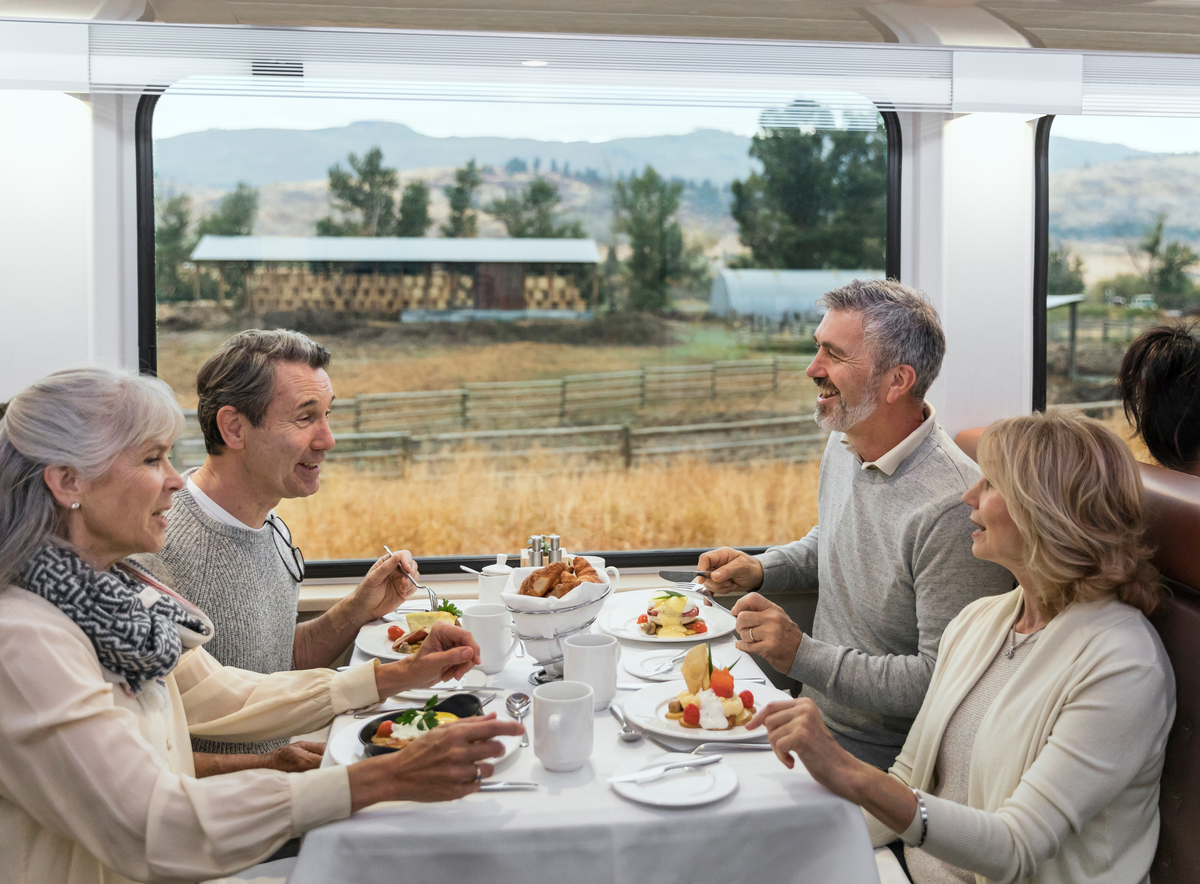
Multi-course meals are prepared onboard by professional chefs and served at the seat (SilverLeaf) or in a dining room (GoldLeaf). Dining service reflects fine-dining standards, elevating the journey beyond transportation.

Curated storytelling
3

Curated storytelling

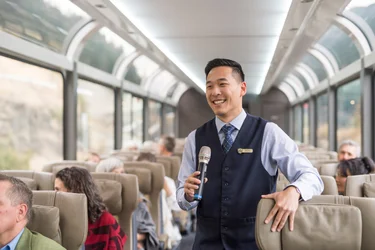
Hosts share engaging commentary about landscapes, wildlife, and regional history. Storytelling enriches the journey by connecting scenery with cultural context.

Hotel accommodations
4

Hotel accommodations

Overnight stays are arranged in partner hotels, ensuring comfort after each day’s travel. The feature complements daylight-only train service and ensures a seamless experience.

Exclusive routes
5

Exclusive routes

Rocky Mountaineer highlights Western Canada with routes such as First Passage to the West, Journey Through the Clouds, and Rainforest to Gold Rush. Each route showcases iconic scenery and historic sights, including the Spiral Tunnels, Castle Mountain, and Mount Robson.

Premium Service Levels
6

Premium Service Levels

Travellers select between GoldLeaf and SilverLeaf service classes, each offering distinct seating and dining arrangements. Premium options provide flexibility while maintaining a luxury standard.

Is VIA Rail better than Rocky Mountaineer? 

No, VIA Rail is not better than Rocky Mountaineer. VIA Rail and Rocky Mountaineer serve different purposes rather than one being universally better than the other. Rocky Mountaineer is designed around premium sightseeing experiences, with an emphasis on daylight travel, scenic access, and structured onboard service. VIA Rail is stronger for national coverage and long-distance mobility, while Rocky Mountaineer leads on premium sightseeing travel.

How much do VIA Rail tickets cost from Vancouver to Banff or Jasper? 

VIA Rail tickets from Vancouver to Jasper cost about $170 and $300 CAD per person in Economy class when booked in advance. VIA Rail operates service to Jasper, not directly to Banff. Travellers heading to Banff must continue by road from Jasper. Economy class fares on Vancouver–Jasper route vary depending on the season, demand, and availability, with prices fluctuating rather than following a fixed rate. 

Higher service classes on the same route increase the cost well beyond Economy levels. Sleeper Plus and private cabin fares are priced substantially higher because those options include beds, meals, and onboard accommodations for multi-day travel. Economy class only includes a seat. Booking early and choosing VIA Rail off-peak travel dates offers the lowest possible ticket prices on this long-haul route. The rail journey between Vancouver and Jasper takes about 19 to 20 hours over roughly 847 km, and the VIA Rail cost reflects that long distance, with variable pricing based on seat class and timing.

Explore: Vancouver to Jasper Train

What are the superior sides of VIA Rail over Rocky Mountaineer?

The superior sides of VIA Rail over Rocky Mountaineer are listed below.

Year-round service
1

Year-round service

VIA Rail operates train services throughout the year, including winter journeys through the Rockies and across the prairies. Rocky Mountaineer runs seasonally from spring to fall, reducing travel opportunities during colder months.

Overnight travel
2

Overnight travel

VIA Rail provides sleeper cabins and overnight service, allowing passengers to rest onboard while covering long distances. Rocky Mountaineer requires hotel stays at night, as trains operate only during daylight hours.

Affordable fares
3

Affordable fares

VIA Rail offers varied fare classes, including economy and sleeper options, making travel accessible to a wider range of budgets. Rocky Mountaineer maintains premium pricing due to its luxury focus.

Practical transportation
4

Practical transportation

VIA Rail functions as a national passenger rail service, connecting cities and communities for leisure and essential travel. Rocky Mountaineer emphasizes sightseeing experiences without serving as a practical transportation network.

Different routes
5

Different routes

VIA Rail highlights diverse landscapes, including Atlantic coastlines, prairie provinces, and mountain ranges. Rocky Mountaineer concentrates on Western Canada’s mountain scenery, limiting exposure to other regions.

Is Rocky Mountaineer better than VIA Rail? 

No, Rocky Mountaineer is not better than VIA Rail as both train services serve different purposes. Rocky Mountaineer is designed for premium sightseeing journeys, with daytime-only travel, curated service, and a strong focus on scenery. VIA Rail, by contrast, functions as Canada’s national passenger rail service, offering year-round routes, long-distance mobility, and broad geographic coverage. Rocky Mountaineer leads in structure, high-end sightseeing travel, while VIA Rail is better suited for transportation between cities and regions across the country. 

Why is Rocky Mountaineer so expensive compared to VIA Rail?

Rocky Mountaineer is more expensive compared to VIA Rail because Rocky Mountaineer is a sightseeing experience rather than point-to-point rail transportation. Rocky Mountaineer journeys limit travel to daylight hours through the Canadian Rockies, include plated meals and beverages onboard, and pair rail segments with hotel stays each night as part of a single package. 

VIA Rail operates as a national rail network, offering economy to sleeper classes designed for long-distance travel and flexible pricing. While many VIA Rail fares are more affordable and transportation-focused, premium options such as Sleeper Plus and private cabins can also be expensive, particularly on long-distance routes. 

The price difference reflects Rocky Mountaineer’s experience-first model compared with VIA Rail’s transportation-focused structure, which helps explain the higher Rocky Mountaineer Train Cost. 

Is Rocky Mountaineer worth the money?

Yes, Rocky Mountaineer is worth the money for travellers who value scenic access, structured service, and a relaxed pace over basic rail transportation. The Rocky Mountaineer experience is built around daylight travel through the Canadian Rockies, onboard hosts who provide narration and manage service flow, and professionally plated meals timed to scenic viewing hours rather than point-to-point transit. 

Rocky Mountaineer is a premium sightseeing journey where pricing reflects curated routing, off-train hotel nights, and consistent comfort across every segment. VIA Rail is better suited to long-distance mobility and national network travel, while Rocky Mountaineer justifies higher pricing through a dedicated sightseeing experience and scenery-first design.

Choose Your Cabin or Seat Wisely

Double Quote Icon

If you’re on VIA Rail’s The Canadian, we recommend booking a Sleeper Plus Cabin for One or Two, for added privacy and comfort on multi-day trips. On Rocky Mountaineer, GoldLeaf Service upstairs' glass-domed car offers amazing panoramic views.

Blog Author - Athena McKenzie
Athena McKenzie
Content Manager

Rocky Mountaineer and VIA Rail Train Routes

Rocky Mountaineer

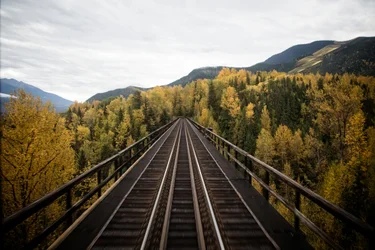
Rocky Mountaineer offers daylight journeys through Western Canada that highlight dramatic mountain scenery, river valleys, and alpine towns. Routes such as First Passage to the West and Journey Through the Clouds showcase landscapes including the Fraser Canyon, Lake Louise, and Jasper National Park. The service emphasizes luxury travel with glass-dome coaches, gourmet dining, and curated storytelling that connects the scenery to regional history. There are no overnight stays on board as travellers overnight in hotels along the way, allowing for a relaxed and scenic experience. Each route is designed to immerse travellers in the natural beauty of the Western Canada and the Canadian Rockies.

Map of Rocky Mountaineer train routes

Journey Timeline – First Passage to the West Route

Vancouver to Kamloops
Day 1

Vancouver to Kamloops

Highlights

  • Depart from the Rocky Mountaineer Vancouver station
  • Travel through the lush Fraser Valley
  • See the rushing waters of Hell’s Gate
  • Travel through semi-arid desert landscapes
  • Arrive in Kamloops and stay overnight in a hotel 

Kamloops to Banff
Day 2

Kamloops to Banff

Highlights

  • Depart from Kamloops early in the morning
  • Admire lake views in the Shuswap region
  • Wind through the historic Spiral Tunnels
  • See Rocky Mountain peaks and alpine lakes
  • Arrive in Banff National Park in the evening 

Journey Timeline - Journey Through the Clouds route

Vancouver to Kamloops
Day 1

Vancouver to Kamloops

Highlights

  • Depart from the Rocky Mountaineer Vancouver station
  • Travel through the fertile Fraser Valley
  • Follow the Fraser River through dramatic canyon scenery
  • Pass small communities and semi-arid landscapes
  • Arrive in Kamloops and stay overnight in a hotel
Kamloops to Jasper
Day 2

Kamloops to Jasper

Highlights

  • Depart from Kamloops early in the morning
  • Travel along the North Thompson River
  • See Mount Robson, the highest peak in the Canadian Rockies
  • Journey through forested valleys and mountain passes
  • Arrive in Jasper National Park in the evening

Journey Timeline - Rainforest to Gold Rush route

Vancouver to Whistler
Day 1

Vancouver to Whistler

Highlights

  • Depart from the Rocky Mountaineer Vancouver station
  • Travel along the scenic Sea to Sky corridor
  • See coastal fjords, waterfalls, and dense rainforest
  • Arrive in Whistler and stay overnight in a hotel
Whistler to Quesnel
Day 2

Whistler to Quesnel

Highlights

  • Depart from Whistler in the morning
  • Travel through ranchlands and river valleys
  • Learn about British Columbia’s Gold Rush history
  • See remote interior landscapes and wide-open spaces
  • Arrive in Quesnel and stay overnight in a hotel
Quesnel to Jasper
Day 3

Quesnel to Jasper

Highlights

  • Depart from Quesnel early in the morning
  • Travel north through forests and mountain scenery
  • Cross into the Canadian Rockies
  • Admire views of alpine peaks and wilderness corridors
  • Arrive in Jasper National Park in the evening

VIA Rail

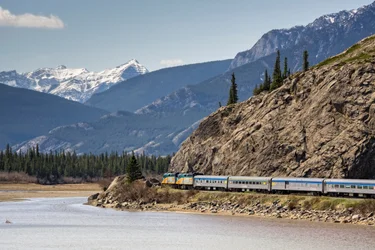
VIA Rail provides national passenger service across Canada, connecting major regions with long-distance routes such as The Canadian from Toronto to Vancouver and The Ocean from Montreal to Halifax. Journeys highlight diverse landscapes, including prairie provinces, Atlantic coastlines, and mountain ranges, offering a broad view of Canada’s geography. Sleeper cabins, dining cars, and domed observation cars create a classic rail experience that balances practicality with comfort. Each route delivers accessibility and cultural variety, making VIA Rail a comprehensive option for exploring Canada from coast to coast.

Map of VIA Rail train routes

Journey Timeline – The Canadian Route

Toronto
Day 1 - Morning

Toronto

Highlights

  • Depart from Union Station in downtown Toronto
  • Views of Toronto’s urban skyline on departure
  • Gradual transition into rural Ontario landscapes
Ontario and Manitoba
Day 2

Ontario and Manitoba

Highlights

  • Travel through rugged landscapes 
  • See ancient, exposed rock and boreal forest
  • Views of lakes and small communities
Prairies
Day 3

Prairies

Highlights

  • Expansive prairie horizons
  • Pass agricultural fields and small prairie towns
  • Sunrise views over wide-open landscapes
Jasper
Day 4

Jasper

Highlights

  • Pass through Jasper National Park
  • Dramatic mountain scenery and possible wildlife sightings
  • Continue to Kamloops and the interior of British Columbia
Vancouver
Day 5

Vancouver

Highlights

  • See the Coast mountains and deep green forests
  • Travel through the Fraser Valley
  • Arrival at Pacific Central Station

Journey Timeline - The Ocean route

Montreal and Quebec
Day 1

Montreal and Quebec

Highlights

  • Explore Montreal sights in the day
  • Depart from Montreal train station in the evening
  • Travel along the St. Lawrence River corridor
New Brunswick and Nova Scotia
Day 2 - Daytime

New Brunswick and Nova Scotia

Highlights

  • Pass through rural New Brunswick
  • Enjoy view of forests and farmland
  • Look out for lighthouses on the way to Moncton
Halifax
Day 2 - Evening

Halifax

Highlights

  • See Nova Scotia’s countryside landscapes
  • Arrive in Halifax in the evening
  • Explore the Canadian Maritimes’ largest city

Other VIA Rail services include the Quebec-Windsor Corridor (which provides frequent service between Toronto, Ottawa, Montreal, and Quebec City), the Winnipeg-Churchill train, and the Jasper-Prince Rupert train. 

How long is the train journey from Vancouver to Banff?

The Rocky Mountaineer journey from Vancouver to Banff takes two days of daylight travel. The train departs Vancouver in the morning and travels through the Fraser Valley and Fraser Canyon before reaching Kamloops for an overnight hotel stay. The train continues through the Columbia Mountains on the second day and arrives in Banff by evening.

VIA Rail does not operate a direct route to Banff. To get to Banff, travellers ride the Rocky Mountaineer Vancouver to Banff train or take VIA Rail’s service from Vancouver to Jasper, which takes approximately twenty hours with overnight travel, followed by a motor coach transfer arranged through Canadian Train Vacations. The definitive journey time depends on the chosen service, two days with Rocky Mountaineer or a combination of train and motor coach travel with VIA Rail.

How long is the train journey from Vancouver to Jasper?

The train journey from Vancouver to Jasper on VIA Rail’s The Canadian takes approximately 19 hours. The route includes overnight travel, passing through the Fraser Valley, the Thompson River region, and the interior of British Columbia before entering the Canadian Rockies. Sleeper cabins and domed observation cars provide comfort and views during the journey. The schedule of the Vancouver to Jasper train is designed to cover long distances efficiently while offering access to diverse landscapes, making the Vancouver to Jasper route an iconic overnight rail experience.

Rocky Mountaineer and VIA Rail train stops

Rocky Mountaineer and VIA Rail train stops are strategic gateways that structure long-distance rail journeys across Canada rather than enabling casual hop-on, hop-off travel. These stops mark transitions between urban centres, mountain corridors, prairie regions, and coastal landscapes. While Rocky Mountaineer operates strictly as a point-to-point experience and VIA Rail allows intermediate boarding on long routes, in both cases stops primarily support rail continuity, scheduled pacing, and overnight logistics, with the core experience centred on onboard travel.

Toronto

Toronto

Begin long-distance rail travel from Canada’s largest urban centre. Toronto anchors eastern VIA Rail routes with major infrastructure, cultural depth, and direct access to cross-country service before westbound travel begins.

Recommended stay: 1–2 days for museums, dining, and waterfront views

Winnipeg

Winnipeg

Arrive in the geographic centre of Canada, where prairie landscapes gradually replace forested terrain. Winnipeg serves as a key operational and cultural midpoint, linking eastern provinces with western regions. Winnipeg is a stop on VIA Rail’s The Canadian train.

Recommended stay: 1–2 days for museums, historic districts, and riverfront areas

Saskatoon

Saskatoon

Pass through Saskatchewan’s river city positioned along the South Saskatchewan River. Saskatoon represents the heart of the prairie region, with open horizons and a compact urban core along the rail corridor. VIA Rail’s Canadian train stops in Saskatoon and other destinations in Saskatchewan.

Stop Duration: Brief operational station stop

Edmonton

Edmonton

Reach Alberta’s capital and a major rail junction before entering the Rocky Mountain corridor. Edmonton bridges prairie landscapes and alpine regions while offering extended potential for extended stopovers. Edmonton is a train stop on VIA Rail’s Canadian route. 

Recommended Stay: 2–3 days for the River Valley Parkland and heritage attractions

Jasper

Jasper

Enter the Canadian Rockies at Jasper National Park, where rail lines pass through protected mountain wilderness. Jasper functions as a primary mountain gateway for scenic rail journeys and multi-night alpine stays. Jasper is a destination on both Rocky Mountaineer and VIA Rail routes.

Recommended Stay: 2–3 days for lakes, waterfalls, and alpine scenery

Lake Louise

Lake Louise

Travel deeper into the Rocky Mountains to Lake Louise, renowned for its turquoise waters and dramatic alpine setting. This Rocky Mountaineer stop offers direct access to Banff National Park’s iconic landscapes and high-elevation hiking routes.

Recommended Stay: 2–3 days for lake views, alpine trails, and mountain scenery

Banff

Banff

Discover Banff, a mountain town surrounded by peaks, hot springs, and national park wilderness. Banff serves as a premier base for exploring the central Rockies and nearby scenic corridors. Banff is a destination on Rocky Mountaineer’s First Passage to the West rail route.

Recommended stay: 2–4 days for Banff National Park highlights, mountain gondolas, and wildlife viewing

Kamloops

Kamloops

Pause within British Columbia’s interior, where desert terrain and river valleys define the landscape. Kamloops serves as an overnight transition point on Rocky Mountaineer daylight-focused mountain routes.

Stop purpose: Overnight hotel stop between rail segments

Vancouver

Vancouver

Conclude western rail journeys at Canada’s Pacific gateway. Vancouver is the start and end point for Rocky Mountaineer and VIA Rail routes. The city marks the transition from mountain corridors to coastal landscapes, where rail travel gives way to urban exploration and oceanfront experiences.

Recommended stay: 1-2 days for outdoor activities, whale watching, and forest walks

Types of trains operated on Rocky Mountaineer and VIA Rail

Train types reflect how each rail operator structures routes, onboard layouts, and travel purposes. Rocky Mountaineer designs its trains specifically for daytime sightseeing through mountain regions, prioritizing panoramic views and onboard service. VIA Rail operates multiple train types to support short-haul travel and long-distance cross-country routes.

Inside the Rocky Mountaineer and VIA Rail trains

Rocky Mountaineer interior design is built around daylight scenic travel, with panoramic glass-dome windows extending overhead and alongside seating, so landscape views dominate the experience. Glass-dome coaches feature forward-facing reclining seats, expansive windows and outdoor viewing platforms. Rocky Mountaineer coaches include dining rooms (GoldLeaf service). Onboard hosts share commentary timed around scenic highlights during daylight rail segments. 

VIA Rail interiors vary by service class and route. Sleeper cabins on long-distance trains contain beds and private or shared washrooms, while dining cars serve multi-course meals with windows framing the passing landscape. Economy class offers reclining seats with shared washrooms and access to café or lounge areas on longer routes for breaks and informal social spaces. Business class, only offered on short-haul services in Eastern Canada, features comfortable seating and meal service.

Service levels: GoldLeaf, SilverLeaf, Sleeper Plus and Prestige

Service levels on Rocky Mountaineer and VIA Rail trains are listed below.

  • SilverLeaf service: SilverLeaf service on Rocky Mountaineer provides single-level glass-dome coaches with reclining seats, oversized windows, in-seat meal service, and hosted commentary during daylight travel.

  • GoldLeaf service: GoldLeaf service on Rocky Mountaineer offers bi-level glass-dome coaches with upper-level seating, a lower-level dining room with plated meals, and an outdoor platform for open-air scenery access.

  • Economy class: Economy class is offered on all VIA Rail routes. Passengers have reclining seats for short-haul or long-distance travel, with shared washrooms and basic onboard service.

  • Business class: Business class offers upgraded service on VIA Rail Corridor routes in Ontario and Quebec. Passengers enjoy priority boarding, business class lounge access at train stations, and in-seat meal service onboard the train. 

  • Sleeper Plus class: Sleeper Plus class includes berths and private cabins with beds, in-room sinks, shared shower facilities, and dining car meals on VIA Rail’s long-distance routes.

  • Prestige Class: Prestige Class features large private cabins with double beds, private washrooms and showers, priority service, and premium dining on VIA Rail’s Canadian route between Vancouver and Toronto.

What popular Rocky Mountaineer train-trip itinerary is best for you?

The popular Rocky Mountaineer train-trip itinerary that is best for you depends on trip length and destinations. Three of the most popular Rocky Mountaineer trips are listed below.

Complete Canadian Rockies by Train

Complete Canadian Rockies by Train focuses on an immersive exploration of Western Canada, combining scenic daytime rail travel with extended stays in the heart of the Canadian Rockies. The journey features a Rocky Mountaineer rail route designed for sightseeing, prioritizing daylight travel through the mountain landscapes of British Columbia and Alberta. The itinerary balances rail segments with hotel stays in major Rocky Mountain towns, such as Jasper, Lake Louise, and Banff, creating a steady rhythm between onboard viewing and land-based exploration. The Complete Canadian Rockies by Train vacation lets travellers explore the highlights of the Rockies at a leisurely pace.

  • Available:

    April – October
  • Length:

    8 days
  • Time on train:

    2 days
  • Price from:

    Loading price... pp
  • Train type:

    Rocky Mountaineer

Essential Rockies by Train

Essential Rockies by Train delivers a 6-day rail itinerary through the heart of the Canadian Rockies. The journey includes a spectacular Rocky Mountaineer route through Western Canada, focusing on mountain corridors, river valleys, and access to national parks. Travellers enjoy daylight rail travel and hotel stays in Banff and Lake Louise, balancing scenic viewing with destination time. The Essential Rockies by train experience is ideal for travellers who want a short Canadian Rockies rail journey.

  • Available:

    April – October
  • Length:

    6 days
  • Time on train:

    2 days
  • Price from:

    Loading price... pp
  • Train type:

    Rocky Mountaineer

Discover Whistler and the Canadian Rockies by Train

Discover Whistler and the Canadian Rockies by Train blends scenic rail travel with immersive mountain experiences on a 9-day journey from the Canadian Rockies to the West Coast. The itinerary begins in Alberta with exploration of Banff, Lake Louise and Jasper in the Rockies, then transitions to luxury daylight travel aboard the Rocky Mountaineer across interior mountain corridors toward Whistler and Vancouver. Travellers experience multiple hotel stays, optional tours in national parks, and two and a half days on the Rocky Mountaineer, with short ground transfers between destinations and opportunities to explore each region along the way. These experiences create a well-rounded journey designed to help travellers discover Whistler and the Canadian Rockies by Train.

  • Available:

    May –September
  • Length:

    9 days
  • Time on train:

    2.5 days
  • Price from:

    Loading price... pp
  • Train type:

    Rocky Mountaineer

What popular VIA Rail train-trip itinerary is best for you?

The popular VIA Rail train-trip itinerary that is best for you depends on route, destinations, and train experiences. Three of the most popular VIA Rail trips are listed below.

Canadian Cross-Country Journey

The Canadian Cross-Country Journey includes a four-night sleeper-train experience between Toronto and Vancouver. Travellers take VIA Rail’s The Canadian train and enjoy private sleeper accommodations and full-service dining while moving through urban centres, prairie interiors, mountain corridors, and forested regions. The Canadian Cross-Country Journey highlights the cities of Vancouver and Toronto as well as the diverse landscapes across Canada.

  • Available:

    April – October
  • Length:

    9 days
  • Time on train:

    4 days / 4 nights
  • Price from:

    Loading price... pp
  • Train type:

    VIA Rail

Classic Eastern Canada by Train

The Classic Eastern Canada by Train itinerary is an 8-day, 7-night trip that explores the cultural heart of Eastern Canada from Montreal and Quebec City to Halifax aboard VIA Rail trains. This journey features travel on VIA Rail’s Ocean sleeper train and daytime Corridor service with comfortable onboard seating and time in historic cities and guided local experiences. The Classic Eastern Canada by Train experience emphasizes regional highlights and urban exploration — including Quebec’s cobblestone streets, Nova Scotia’s coastline, and Montreal’s vibrant culture.

  • Available:

    April – October
  • Length:

    8 days
  • Time on train:

    2 days / 1 night
  • Price from:

    Loading price... pp
  • Train type:

    VIA Rail

Rockies Winter Wonderland by Train

The Rockies Winter Wonderland by Train delivers a winter-focused rail journey through the Canadian Rockies centred on snow-covered landscapes, mountain corridors, and seasonal scenery. The itinerary features an overnight journey on VIA Rail’s The Canadian train from Vancouver to Jasper. The Rockies Winter Wonderland by Train experience highlights frozen rivers, alpine forests, and dramatic peaks while combining sleeper-train service with winter stopovers in mountain communities.

  • Available:

    December – March
  • Length:

    9 days
  • Time on train:

    1 day / 1 night
  • Price from:

    Loading price... pp
  • Train type:

    VIA Rail

Rocky Mountaineer and VIA Rail train reviews

Rocky Mountaineer and VIA Rail train reviews report exceptional scenic views and service, with comments praising friendly hosts, scenic sightings, comfortable seats, and quality food. Guests of Canadian Train Vacations enjoyed seeing the mountain landscapes of the Rockies as they travelled by train. Reviews frequently note that the journey itself becomes a central part of the travel experience, not just a means of transportation between destinations.

Why book Rocky Mountaineer and VIA Rail trains with Canadian Train Vacations?

Book Rocky Mountaineer and VIA Rail trains with Canadian Train Vacations for the reasons listed below.

  • Expertly matched rail experiences: Canadian Train Vacations combines Rocky Mountaineer’s daylight sightseeing journeys through the Canadian Rockies with VIA Rail’s long-distance and regional services that connect major cities across the country.

  • Seamless route integration: By booking through a single specialist, travelers benefit from complementary route coverage — Rocky Mountaineer’s premium western mountain corridors paired with VIA Rail’s national rail network extending beyond the Rockies.

  • Flexible itinerary planning: Canadian Train Vacations designs trips that balance scenic rail travel with practical intercity connections and sightseeing activities, allowing rail segments, hotel stays, and transfers to work together smoothly. Travellers choose types of hotels, guided excursions, and train experiences that suit their budget, interests, and comfort level. 

  • Tailored comfort options: Local experts help travellers select from Rocky Mountaineer’s daytime train services and VIA Rail’s range of accommodations, from business class seating for short routes to sleeper cabins for overnight travel.

  • Local Destination Expertise: Trips are planned by Canada-based travel specialists with firsthand knowledge of rail routes, seasonal conditions, and regional highlights, helping ensure itineraries reflect realistic pacing and meaningful local experiences.

Ride more than one train

Double Quote Icon

Consider combining multiple train routes and experiences on your trip across Canada. One of my favourite options is taking Rocky Mountaineer from Vancouver to the Canadian Rockies, then riding VIA Rail's The Canadian from Jasper to Toronto.

Louise Weiss
Director of Legendary Hospitality

Rocky Mountaineer vs VIA Rail FAQs

© 2026 Fresh Tracks Canada